

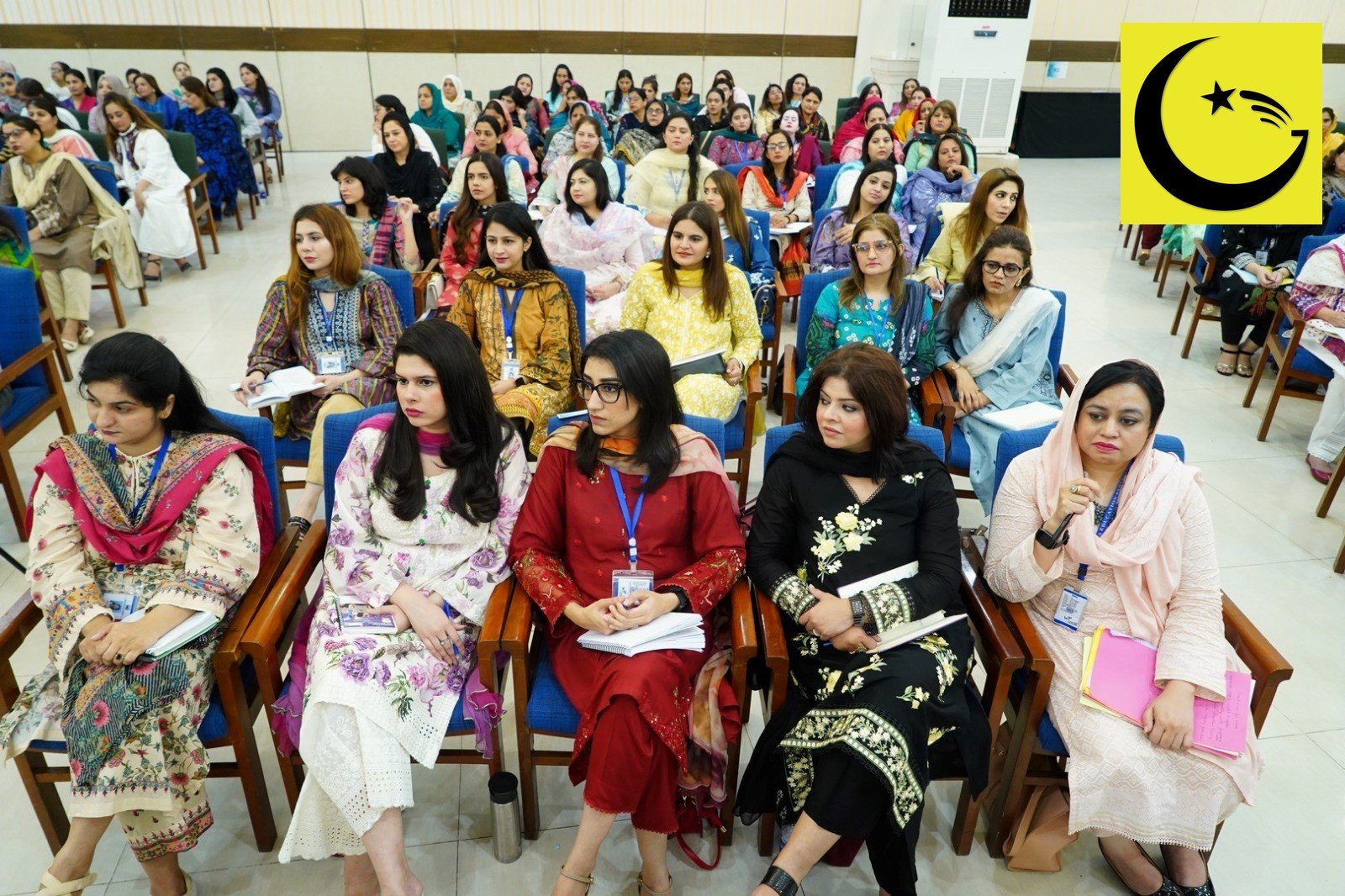
Punjab is about to run the largest programme of AI training for teachers in its history. From Monday 23 November, 25,898 teachers, one from every government primary and elementary school in the province, will attend two-day workshops at tehsil level to learn how artificial intelligence can help them plan lessons, assess pupils and prepare classroom material, and then carry what they learn back to every colleague in their school.
The School Education Department is running the programme through the Punjab Education Curriculum Training and Assessment Authority (PECTAA), under the TALEEM project with support from UNICEF. The official directive, numbered PECTAA/Director(T&C)/2026-45 and issued on 18 November 2026, sets out the nominations, the batch schedule and the rules for every district in the province. Each teacher who completes the training will be known as an AI focal person: the named guide for AI in their school.
How the AI training for teachers will work
One primary school teacher from each school has been nominated, picked for strong ICT and communication skills. The chief executive officers of the district education authorities were instructed to make the nominations and to ensure attendance, and district officers will monitor both days of every batch, because the design only works if every single school is represented.
The 25,898 nominees are divided into five batches, and every tehsil runs the same sequence. Batch 1 trains on 23 and 24 November, Batch 2 on 25 and 26 November, and Batch 3 on 27 and 28 November. Sunday 29 November is a break. Batch 4 follows on 30 November and 1 December, and the final batch runs on 2 and 3 December.
The workshops are hands-on, not a lecture series. Every participant must bring a working laptop, smartphone or school tablet, along with its charger, because the sessions run on live exercises with the tools themselves. Divisional master trainers, a layer of trainers prepared earlier this year, will deliver the sessions on rotation at the tehsil centres.
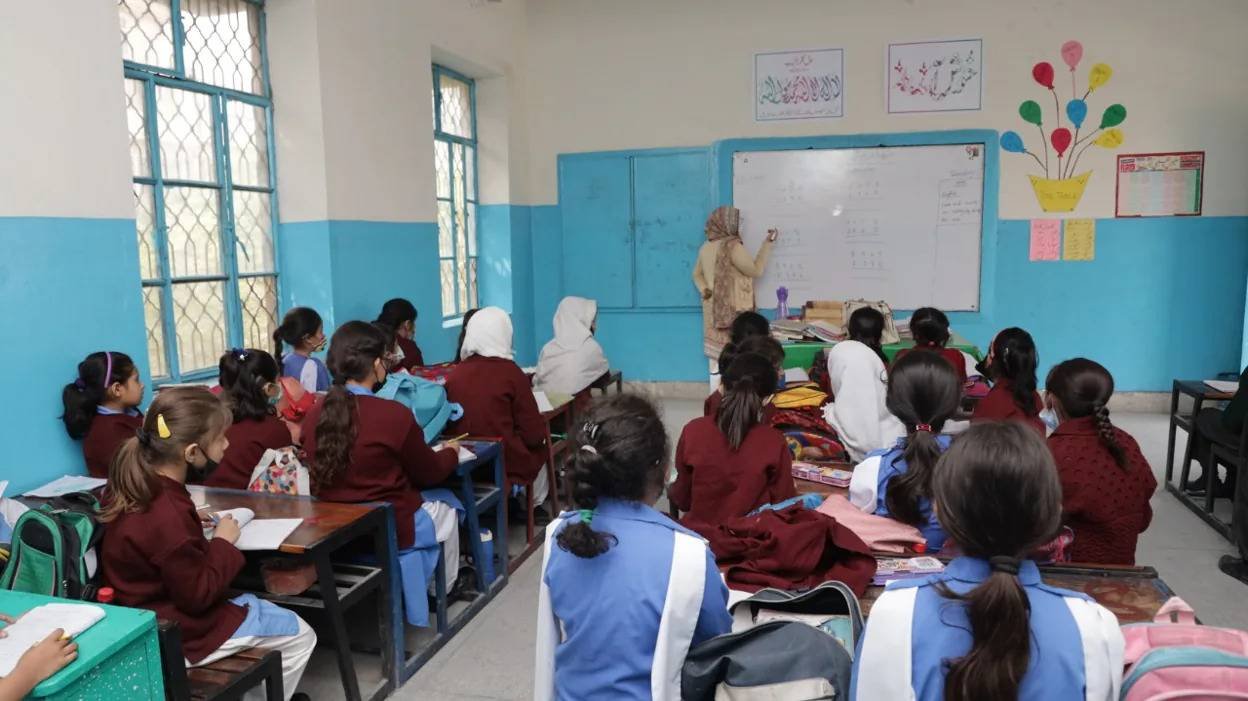
Inside a primary classroom in Punjab, where each school’s trained focal person will carry the new AI methods back to colleagues and pupils. Photo: Academia Magazine
What the teachers will learn
The two days are built around five classroom skills:
- Lesson planning: building structured, curriculum-aligned lesson plans in minutes, with prompts shaped to Punjab Textbook Board standards, including activities for the multi-grade classrooms many primary teachers run.
- Assessment: creating quizzes, worksheets and tests pitched at different ability levels within the same room, so assessment shows what each child has actually learned.
- Content creation: producing reading passages, flashcards and visual learning aids with accessible web and mobile tools.
- Personalised and inclusive learning: breaking difficult ideas into simpler steps for slower learners, and adapting material to the individual needs of pupils.
- Safe and ethical use: spotting errors and invented facts in AI output, checking material before it reaches a class, and protecting pupils’ privacy and data.
The thread running through all five is time. A primary teacher who can draft a lesson plan or a tiered set of questions in minutes, rather than hours at a register in the evening, gets that time back for the children in front of her.
Part of the TALEEM project, and what happens next
The AI training for teachers sits inside the TALEEM project, short for Transformation in Access, Learning, Equity and Education Management, the School Education Department’s flagship programme for primary education in Punjab, run with support from UNICEF. Training one teacher per school is a deliberate design: schools stay open while the batches run, and no school is left out because it is small, remote or short of staff.
The two days are only the start. When the focal persons return to their schools, each one becomes a mentor for the rest of the staff, guiding fellow teachers through a self-paced AI course on the official learning management system and helping them adopt the methods in their own classrooms. The model is a cascade: master trainers teach the focal persons, the focal persons teach their schools, and the skill spreads through the staffroom instead of stopping with a single trainee.
A focal person in every school
By 3 December, every government primary and elementary school in Punjab, all 25,898 of them, will have its own AI focal person. That is what makes this round of AI training for teachers different from the workshops that came before it: it does not sample a few model schools in a few cities, it covers the entire public primary system of Pakistan’s largest province in eleven days. Whether it changes classrooms will depend on the follow-through, the mentoring, the online course and the lesson plans written afterwards. But the map is complete. From next month, there will be no government primary or elementary school in Punjab without a named teacher responsible for bringing AI into its teaching.
Read More
The province’s move to bring artificial intelligence into its classrooms is already taking shape at campus level too. Read how Daanish School Kuri was chosen as the pilot campus for AI personalised learning, in a project designed to adapt lessons to each pupil.
Sources
- TechJuice, Punjab sets start date for AI training of 25,898 teachers
- FinSaves, PECTAA 2-day AI training for 25,898 AI focal persons
- NextUp News, Punjab to train 25,898 teachers in AI for classrooms from November 23
- Featured photo: DHA Lahore Education System (teachers at a training workshop in Lahore)
- In-body photo: Academia Magazine (a primary school classroom in Punjab)

Umar Farooq is the founder and editor of Good News Pakistan. An engineer by profession and a writer by passion, he started the site in December 2022 to share good news from Pakistan, and has since written and edited more than 200 articles about its people, sports, science, business and world records. He believes the story of Pakistan is bigger than its headlines, and that good news, told honestly, is worth telling every day.