

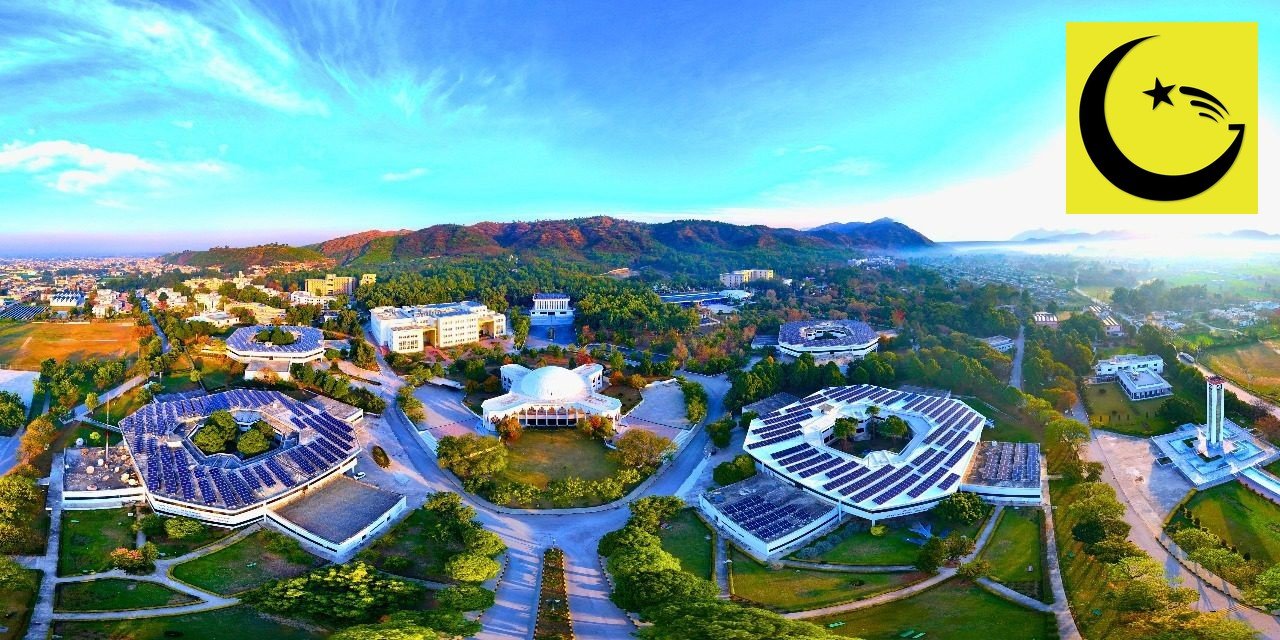
If you graduated in engineering or computing and are still looking for your first break, this is a deadline worth circling. The Ghulam Ishaq Khan Institute of Engineering Sciences and Technology (GIKI) is accepting applications for fully funded chip design training under the Prime Minister’s National Semiconductor Human Resource Development Program (INSPIRE), and those selected will be paid a stipend of Rs50,000 a month while they train. Applications close on 6 December 2026.
The training, in Digital IC Design and Verification, is offered by the Pakistan Software Export Board (PSEB) with the Ministry of Information Technology and Telecommunication, and is delivered by a consortium led by GIKI. It is a four month programme built to turn fresh graduates into job ready chip designers, a skill Pakistan has mostly had to buy from abroad until now.
What the chip design training covers
Trainees will learn digital integrated circuit (IC) design and verification, the two halves of making a computer chip: drawing up the circuits that sit inside modern electronic devices, and then testing those designs rigorously before they are ever manufactured. The curriculum is industry approved, so what is taught matches what employers in the field actually ask for.
The learning is practical rather than purely theoretical. Sessions take place in a fully equipped IC design laboratory, with experienced faculty and dedicated mentors guiding each trainee. Verification, checking a design exhaustively in simulation before it is committed to silicon, takes up much of the working life of a chip designer, and the programme gives it equal weight alongside design itself. At the end of the programme, participants also receive direct industry employment support, help that connects them with the companies and design houses looking for exactly these skills.
Who can apply, and what selected trainees get
The programme is open to graduates holding a BS degree in Electrical Engineering, Electronics Engineering, Computer Engineering, Computer Science, Software Engineering, or a related discipline, with a CGPA of 2.5 or above. The degree must be completed before the training begins.
Those selected pay nothing for the training itself. On top of the free tuition, every trainee receives a monthly stipend of Rs50,000 for the full training period, so they can focus on learning a demanding specialism without having to earn alongside it. Training locations for this round are GIKI at Topi, Islamabad and Abbottabad, and places are limited.
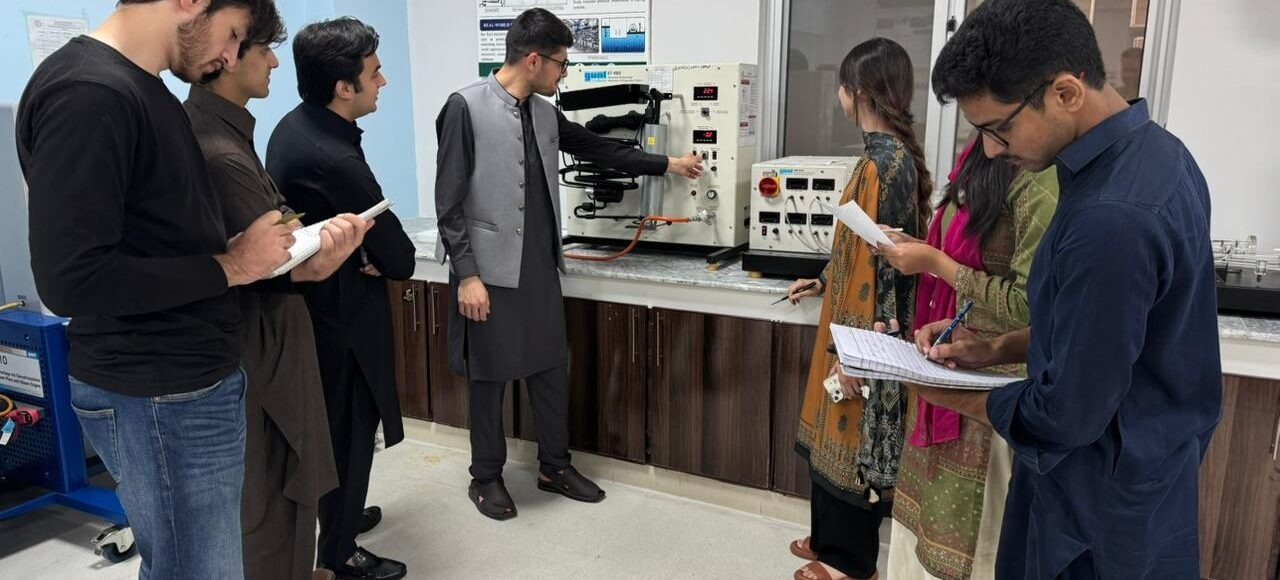
Students take notes during a practical session in a GIKI laboratory, the kind of hands-on lab work the INSPIRE training is built around. Photo: GIKI
How to apply, and by when
Applications are made through GIKI’s official programme page at giki.edu.pk/ic-design, where the eligibility criteria and application instructions are set out in full. The last date to apply is 6 December 2026. After the deadline, GIKI will shortlist candidates for further assessment, which may include a written test and an interview. Questions about the programme can be sent to inspiregiki@giki.edu.pk.
The chip design training itself is tentatively scheduled to run from January to April 2027. Anyone who graduated in the past few years and meets the degree and CGPA conditions has a straight run at it, but the window is short, so the application is worth completing well before the closing date.
Why it matters
Semiconductors sit inside almost everything electronic, yet Pakistan has had very few people trained to design them. INSPIRE is the government’s attempt to change that: the programme carries a total allocation of Rs4.844 billion and is meant to build a credible domestic pipeline of chip design talent for an industry GIKI describes as a global market worth more than $600 billion.
GIKI does not carry the work alone. Its consortium partners are the National Electronics Complex of Pakistan (NECOP), COMSATS University Islamabad’s Abbottabad Campus, the National Institute of Electronics, and the Center for Advanced Research in Engineering (CARE), bringing together universities and research institutions under one coordinated framework, with PSEB and the Ministry of IT and Telecommunication behind it.
Nor is this round a leap in the dark. An earlier cohort under the same programme ran during 2026, so the January intake joins a scheme that is already operating rather than one still on paper. Each completed round adds to a small but growing pool of Pakistani engineers who can point to formal training in a field where qualified people are scarce worldwide.
Chip design is also work that suits Pakistan. It needs skill rather than factories, so trained designers can serve clients anywhere in the world from home soil, in the same way Pakistan’s software freelancers and IT firms already earn from exports. Every cohort this programme trains widens that opportunity a little further.
Read More
Pakistan’s chip ambitions go beyond training. A NUST spin-off working in chip design, ChipXPRT, recently raised PKR 50 million in seed investment, a sign that local design firms are starting to attract serious backing: NUST Spin-off ChipXPRT Raises PKR 50M Seed Investment.
Sources
- TechJuice, Government offers free chip design training with Rs. 50,000 stipend
- GIKI, official INSPIRE training announcement on LinkedIn
- ProPakistani, Govt offers free chip design training with Rs. 50,000 monthly stipend
- CW Pakistan, PSEB launches fully funded Digital IC Design and Verification training under INSPIRE
- GIKI, Digital IC Design and Verification Training programme page
- Featured photo: GIKI (the GIKI campus at Topi, Swabi, seen from above)
- In-body photo: GIKI (students during a practical session in a GIKI laboratory)

Umar Farooq is the founder and editor of Good News Pakistan. An engineer by profession and a writer by passion, he started the site in December 2022 to share good news from Pakistan, and has since written and edited more than 200 articles about its people, sports, science, business and world records. He believes the story of Pakistan is bigger than its headlines, and that good news, told honestly, is worth telling every day.