

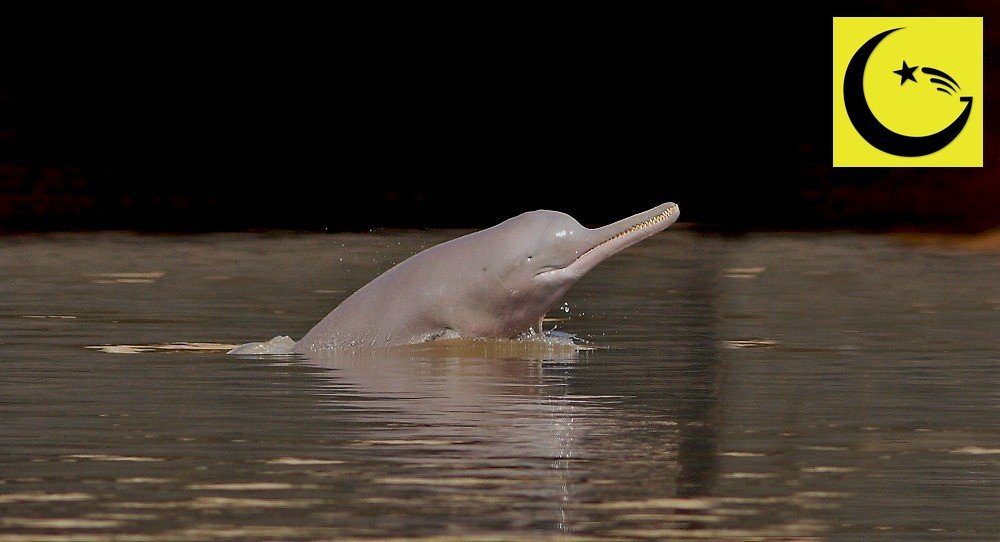
The Indus river dolphin, the blind bhulan that lives almost nowhere else on Earth, is quietly coming back. In the last full survey of the river, teams travelling the Indus in paired boats counted 1,816 dolphins, about 50 percent more than the 1,200 estimated in the first census in 2001, and a peer-reviewed study published in 2025 put the true 2017 population higher still, at an estimated 1,987. This year the recovery gained new legal ground too, as Punjab notified a dolphin sanctuary that joins Sindh’s long-standing reserve to protect some 400 kilometres of the river.
Counting a dolphin that barely surfaces
The bhulan is one of the hardest animals in Pakistan to count. It is functionally blind, feeling its way through the silty water by echolocation, and it breathes in quick, rolling surfacings that give observers a second or two to spot it. That is why the counts are done the slow way. Every five years since 2001, survey teams led by WWF-Pakistan, working with the Zoological Survey of Pakistan and the wildlife departments of Sindh, Punjab and Khyber Pakhtunkhwa, have travelled the river in tandem boats during the low water season, when the dolphins are most concentrated.
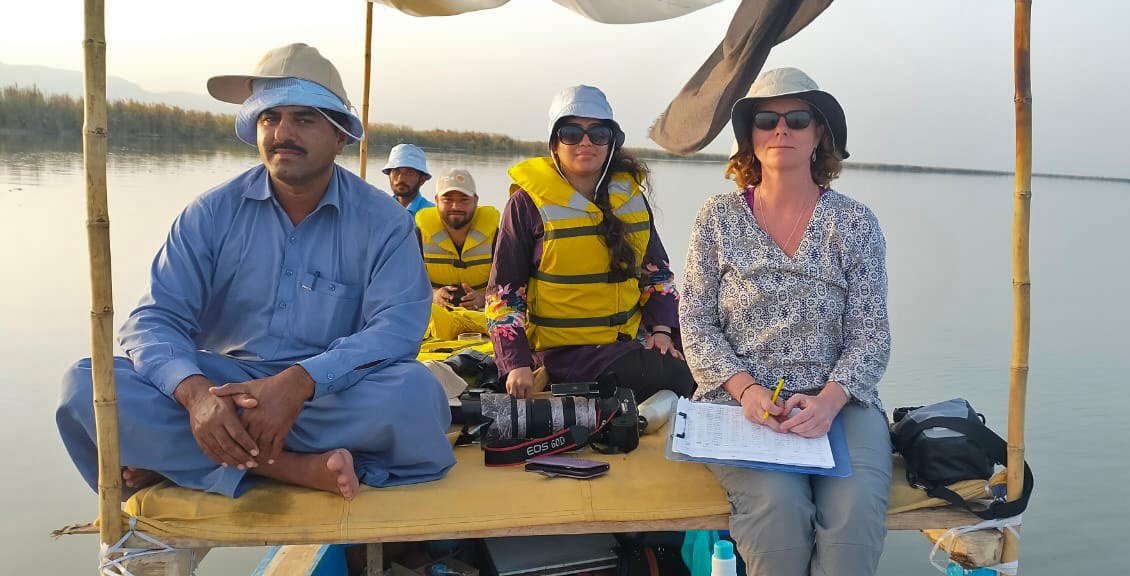
Survey observers scan the river from a boat during the count, watching for the brief surfacing that gives the counters a second or two to spot each dolphin.
Photo: WWF-Pakistan via Mongabay
The 2017 survey ran from 20 March to 13 April, with a team of 20 researchers in four boats covering more than 800 kilometres of the main channel between the Chashma and Sukkur barrages. The count came in stretch by stretch: 170 dolphins between Chashma and Taunsa, 571 between Taunsa and Guddu, and 1,075 between Guddu and Sukkur. Added together, the river held 1,816 dolphins that the teams actually saw.
Why the Indus river dolphin has two numbers
Both headline figures are true, and they measure different things. The 1,816 is the direct count, the dolphins observers physically recorded during the 2017 survey. The 1,987 is a scientific estimate of the real population, produced by Aisha and colleagues in a study published in the journal Endangered Species Research in 2025. Using mark-recapture modelling on the survey sightings, the researchers calculated how many dolphins the boats were likely to have missed, and put the 2017 abundance at 1,987, up from a modelled 1,665 in 2011. That is a rise of 19.4 percent in six years.
Keeping the two apart matters, because the trend is the story. Sindh Wildlife Department officials have since spoken of around 2,100 dolphins in more recent reporting, an encouraging sign, though that figure is officials’ reporting rather than a fresh census. The next full survey will settle the current number; until then, the verified line runs from about 1,200 in 2001 to a counted 1,816 and an estimated 1,987 in 2017, and it points firmly upward.
The stronghold between two barrages
The heart of the recovery beats between the Guddu and Sukkur barrages in Sindh, inside the Indus Dolphin Reserve. Sindh gave the species legal protection in the 1970s and declared the reserve on this stretch, which is also recognised as a Ramsar wetland site. Protection worked. The sub-population here rose from 602 dolphins in 2001 to the 1,075 counted in 2017, the largest single group of the species anywhere in the world. More than half of all the bhulan alive today swim in this one guarded reach of the river.
READ MORE
Indus Delta Mangroves: The Largest Arid Climate Mangrove Forest in the World
Rescues on the riverbank
Numbers like these are built one rescued animal at a time. Since 1992, WWF-Pakistan and the Sindh Wildlife Department have run a rescue programme for dolphins that stray into irrigation canals and cannot find their way back to the main channel. By the time of the 2017 survey, 131 dolphins had been caught, transported and released back into the river. A round-the-clock helpline and a monitoring network of riverside communities mean stranded animals are reported quickly, and fishermen who once saw the dolphin as competition now phone in its rescues. As WWF-Pakistan’s then director general Hammad Naqi Khan put it, the communities are the conservationists’ eyes and ears, and the species is an indicator of the health of the river on which tens of millions of people depend.
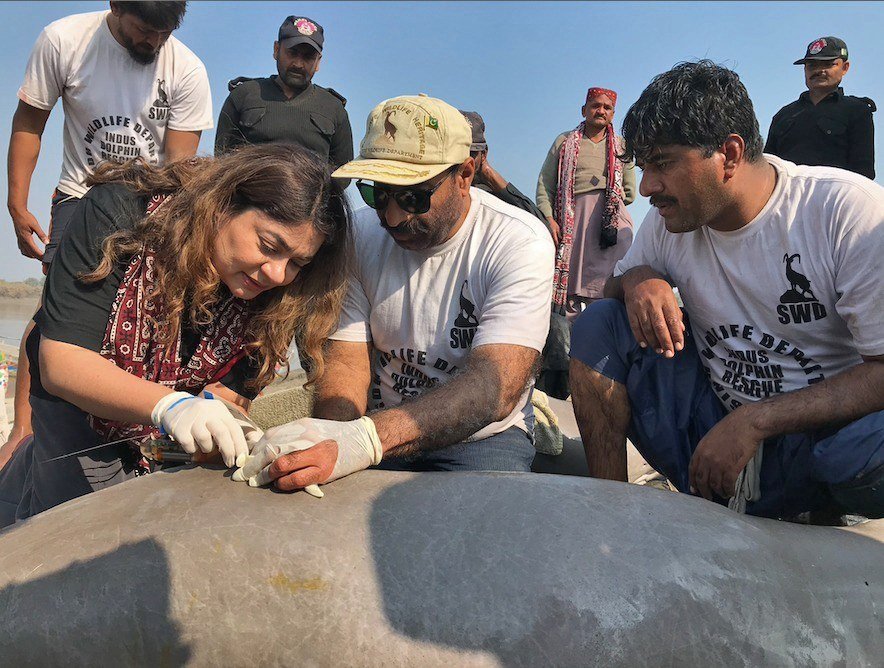
Dr Uzma Khan of WWF-Pakistan and Sindh Wildlife Department colleagues fit a satellite tag to a rescued Indus dolphin near Sukkur in January 2022, the first tagging of its kind in Asia.
Photo: Janan Sindhu via Mongabay
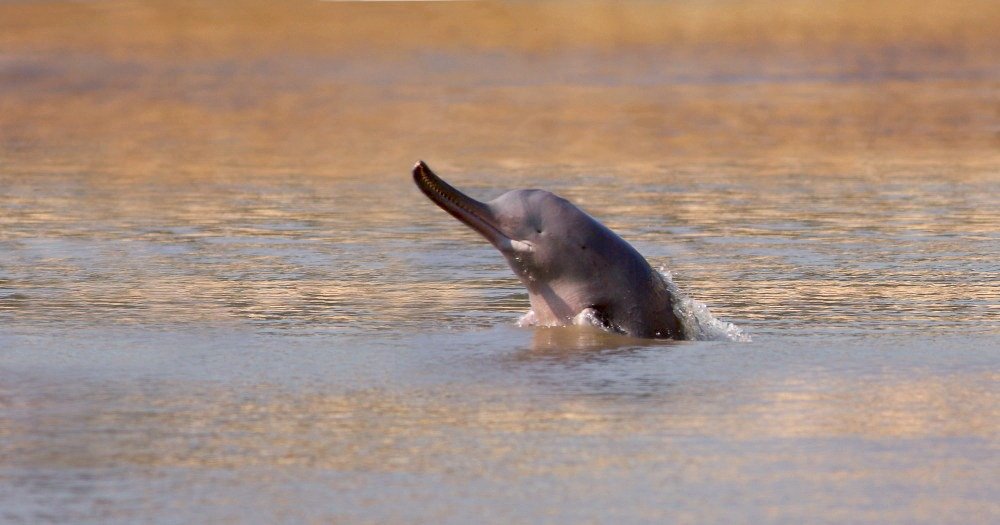
A bhulan breaks the surface in the Indus. The species surfaces for only a second or two at a time, which is why survey teams count it from paired boats in the low water season.
Photo: WWF-Pakistan via Mongabay
Punjab adds a sanctuary of its own
In June 2026, the story gained a new chapter upstream. The Punjab government officially created the Punjnad Indus River Dolphin Sanctuary, safeguarding nearly 200 kilometres of the river, as reported by Mongabay. The new sanctuary connects with Sindh’s protected stretch to form a contiguous 400 kilometres of legally protected habitat. Punjab holds the second largest sub-population, between Taunsa and Guddu barrages, modelled at 660 dolphins in 2017, and the sanctuary gives officials a stronger basis for regulating the commercial fishing contracts that WWF biologist Uzma Khan identifies as a leading entanglement risk in the province.
Still endangered, and that is the point
Nobody working on the bhulan calls it saved. Gillnet entanglement accounted for 52 percent of documented dolphin deaths between 2008 and 2023, canals still trap animals, and low flows and pollution press on a species confined to about a fifth of its historical range. It remains listed as Endangered, and the world total is still under 2,000 animals. But set against the world’s other river dolphins, nearly all of them declining, the bhulan is moving the other way, and it is moving because Pakistan protected it, counted it and kept counting it for a quarter of a century. As the 2025 study’s lead author Hamera Aisha notes, Pakistan carries a unique global responsibility for this species. On the evidence of the surveys, it is a responsibility the country is living up to.
Sources
- WWF, Signs of hope as population of endangered Indus River dolphin jumps in Pakistan
- WWF-Pakistan, Signs of Hope for the Endemic and Endangered Bhulan: comprehensive population assessment of the Indus River dolphin, 2017 (PDF)
- Aisha, H., Khan, U. and colleagues, Abundance of the endangered Indus River dolphin Platanista minor, Endangered Species Research 58 (2025)
- Mongabay (Muhammad Talal), Pakistan expands protected habitat for Indus River dolphin as recovery offers hope, September 2026, via Focusing on Wildlife
- Pakistan Press Foundation, Conserving our endangered dolphins
- Featured photo: WWF-Pakistan, via Mongabay
- In-body photo: WWF-Pakistan, via Mongabay
- Body photo 2: WWF-Pakistan, via Mongabay
- Body photo 3: Janan Sindhu, via Mongabay

Umar Farooq is the founder and editor of Good News Pakistan. An engineer by profession and a writer by passion, he started the site in December 2022 to share good news from Pakistan, and has since written and edited more than 200 articles about its people, sports, science, business and world records. He believes the story of Pakistan is bigger than its headlines, and that good news, told honestly, is worth telling every day.