

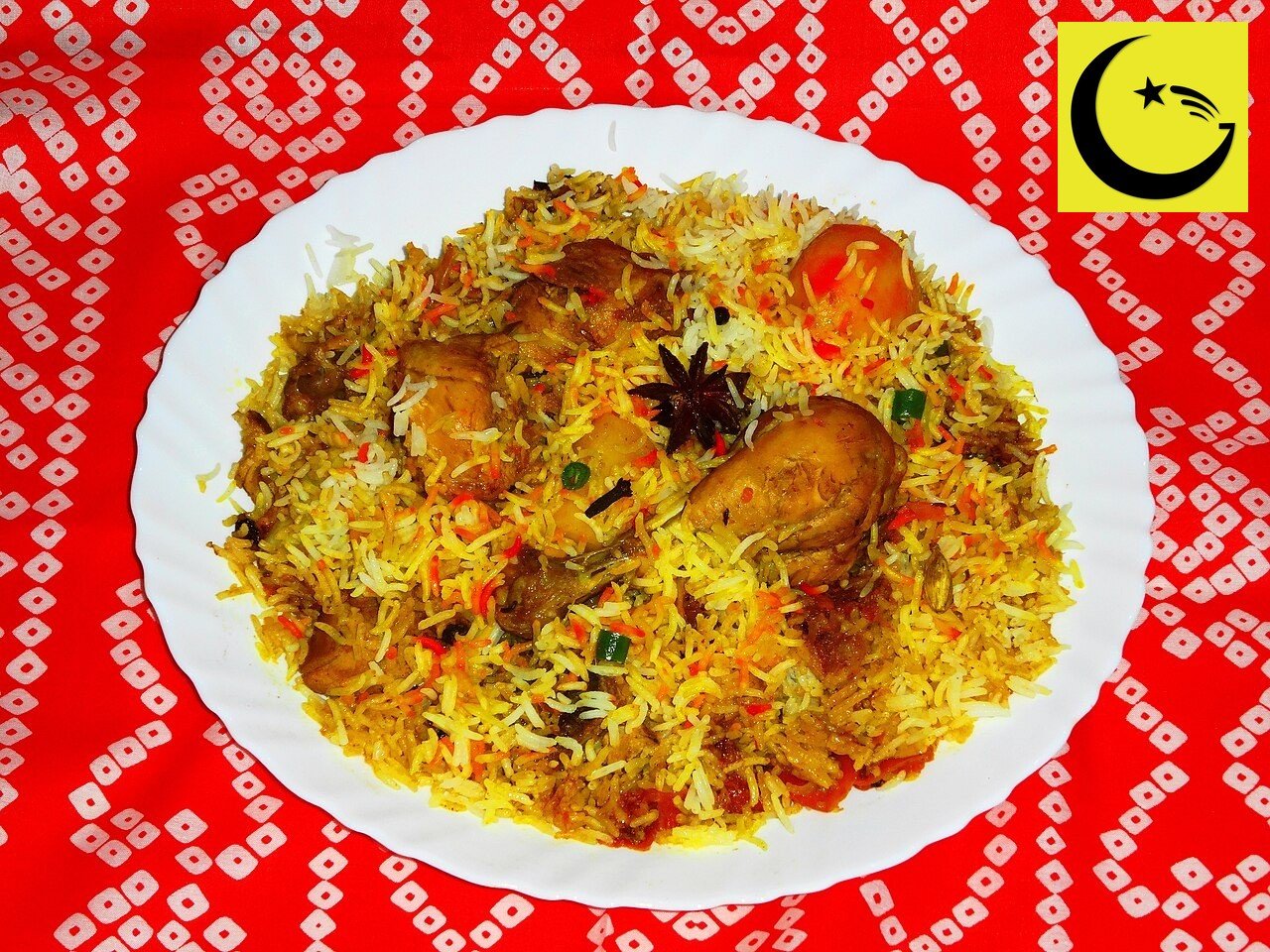
Ask Karachi to name itself on a plate and the answer arrives by the degh: Karachi biryani, fiery, tangy, streaked orange and white, and always, always carrying its aloo. The masala-stained potato, joined by tart dried plums, is the signature of a version shaped by the cooks who rebuilt their lives in this city after 1947, and by the cauldron shops of Burns Road, its oldest food street. Other cities have their biryanis. Karachi has a position, and it comes with potatoes.
What makes Karachi biryani Karachi’s own
Every biryani town guards its markers, and Karachi’s are unmistakable. The heat builds rather than bluffs. The tang comes from aloo bukhara, dried plums cooked into the masala. The rice lands in layers of deep orange and plain white, never uniformly dyed, and whole spices, green chillies and mint run through it. Above all there is the potato, boiled in the masala until it stains through, treated by Karachi cooks as non-negotiable: serve this dish without aloo and, in this city, you have served something else.
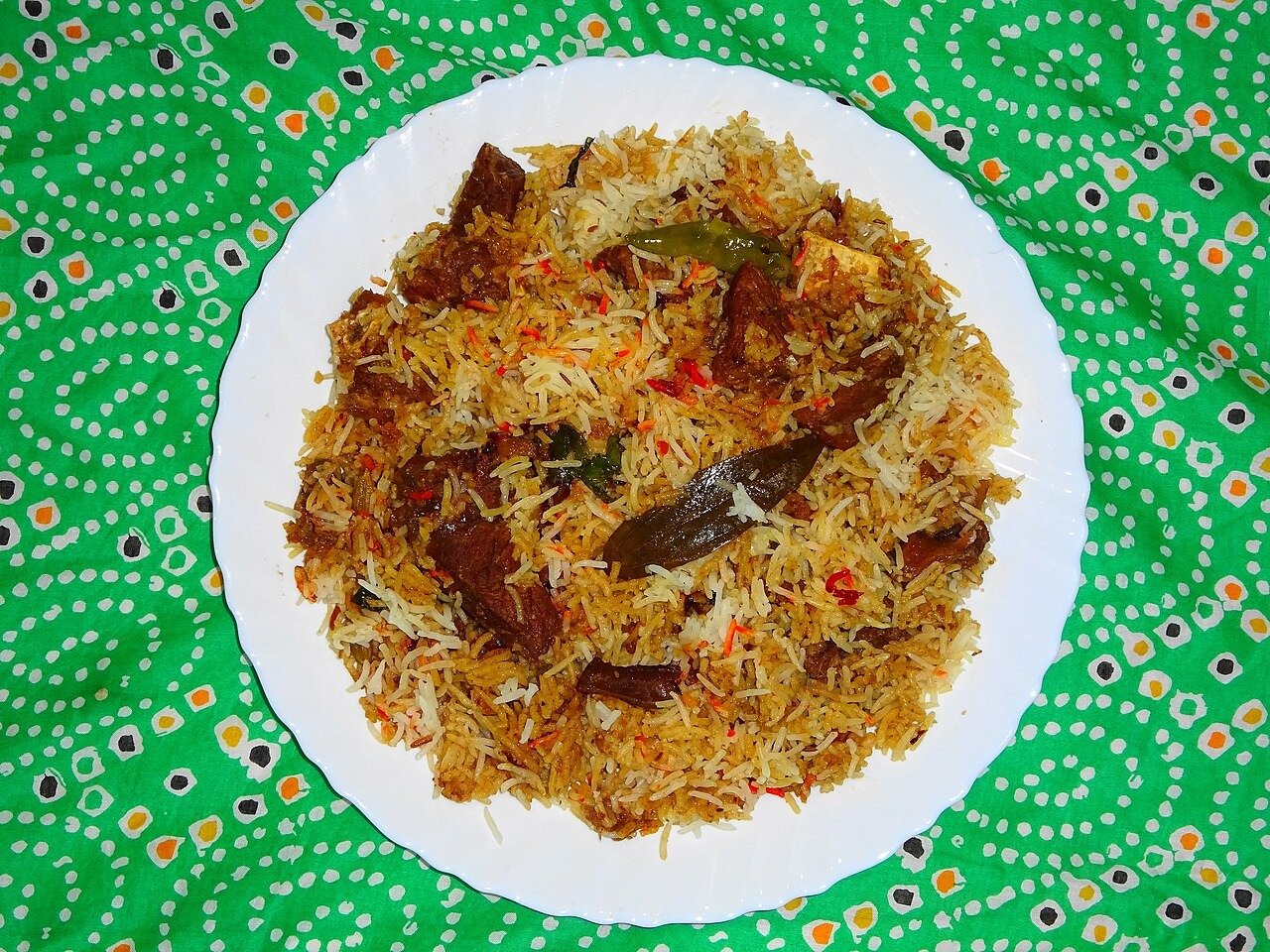
Beef biryani, Karachi style: bone-in pieces, whole spices and rice stained deep orange by the masala.
Photo: Miansari66, CC0, via Wikimedia Commons
The city’s styles sit side by side. Sindhi biryani, fierce and plum-sour, is cooked in homes across the province. Memoni cooks have their own hand with the dish. The Saddar style sold from the deghs runs spicier and darker than most. Biryani itself travelled widely across the region long before Karachi existed, and this piece claims no invention. What Karachi did was take the dish in, argue over it for three generations, and stamp it with an aloo.
Burns Road, where the deghs never cool
The natural home of Karachi biryani is a single street in old Saddar. Burns Road, named after the Scottish doctor James Burnes and laid out in the colonial era, became the city’s food heart after Partition, when migrant families settled around it and opened eateries. City historian Arif Hassan has put the number of Delhiwalas who arrived in the area at around 80,000, and the kitchens they founded still anchor the street, names such as Waheed Kabab House and Karachi Haleem among them.
Here biryani is cooked the way it has always been cooked on this street, in deghs big enough to feed a wedding, layered and sealed and opened in clouds of steam. In Ramazan the cauldrons work around the clock for iftar and sehri crowds, and the rest of the year they feed office workers, students and families until late. Since January 2021 the street has been pedestrianised in the evenings under a restoration of its crumbling facades, and the foodies, as the coverage at the time happily reported, came back.
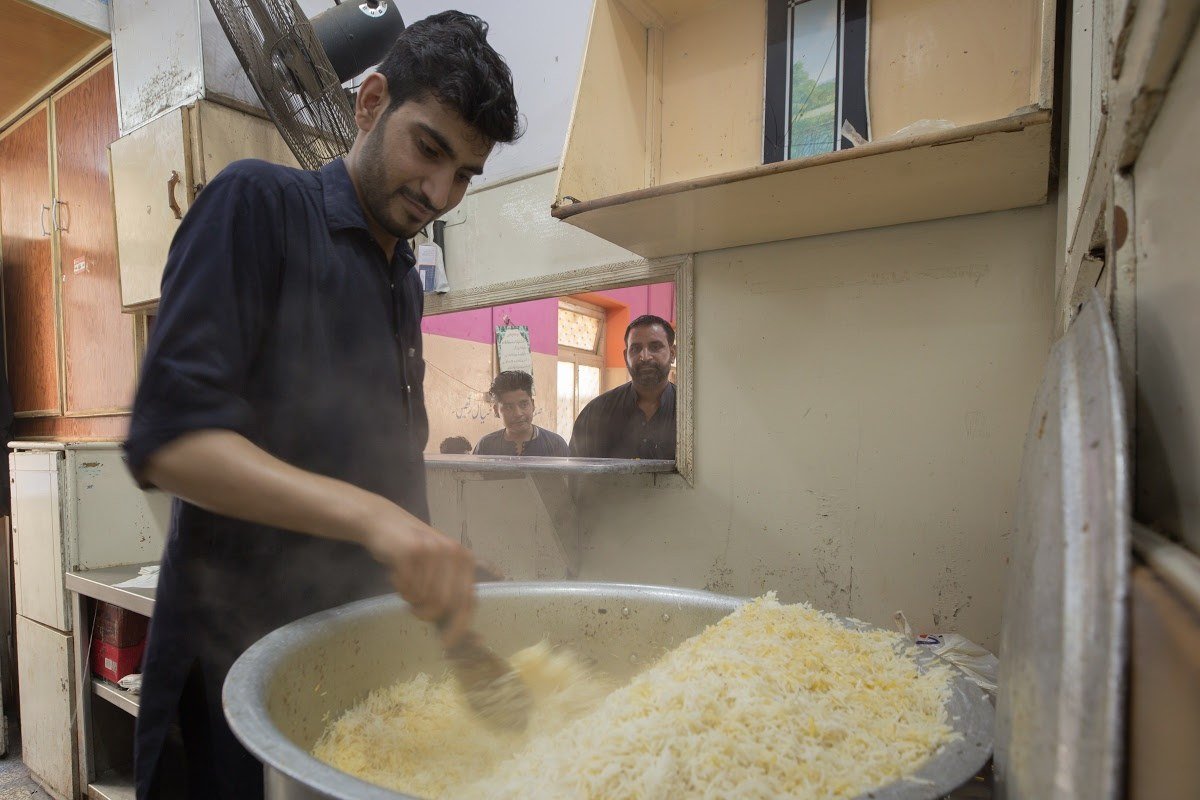
A cook serves biryani straight from a steaming degh at Al Rehman Biryani Centre in Saddar, as customers watch through the serving hatch.
Photo: SOC Films via Google Arts & Culture
READ MORE
37 Pakistani Companies Showcase Food Products at SIAL Paris 2026
The student stall that carried Karachi biryani to the world
The dish’s most famous ambassador began with a handcart. On 3 October 1969, Haji Muhammad Ali started selling biryani from a rerhi on Katrak Road in Saddar, a few streets from Burns Road, aiming squarely at the students of the schools around him, St Patrick’s and St Joseph’s among them. He called the stall Café Student. The biryani was priced for schoolboys’ pockets, with a discount for students, and it was eaten standing, off tin plates.
By the mid-1970s the cart had become a shop with chairs. In 1999 the business, by then known to the whole city as Student Biryani, moved to its present Saddar premises, and from there it branched across Karachi, across Pakistan and abroad. The plate it carried with it is the city’s template: chicken or beef under orange-streaked rice, whole spices, a squeeze of raita on the side, and the aloo in every serving. A stall that began by feeding students now feeds the diaspora’s nostalgia, one degh at a time.
The arguments that never end
Karachi agrees on the potato and argues about everything else. Chicken or beef. How much heat is honest before it becomes showing off. Whether the raita goes over the top or stays on the side. Whose degh, the famous Saddar names or the neighbourhood pakwan centre that has never once let you down. The arguments run at wedding halls where the degh is the guest of honour, at office lunches eaten off foil trays, and at Friday family tables across the city.
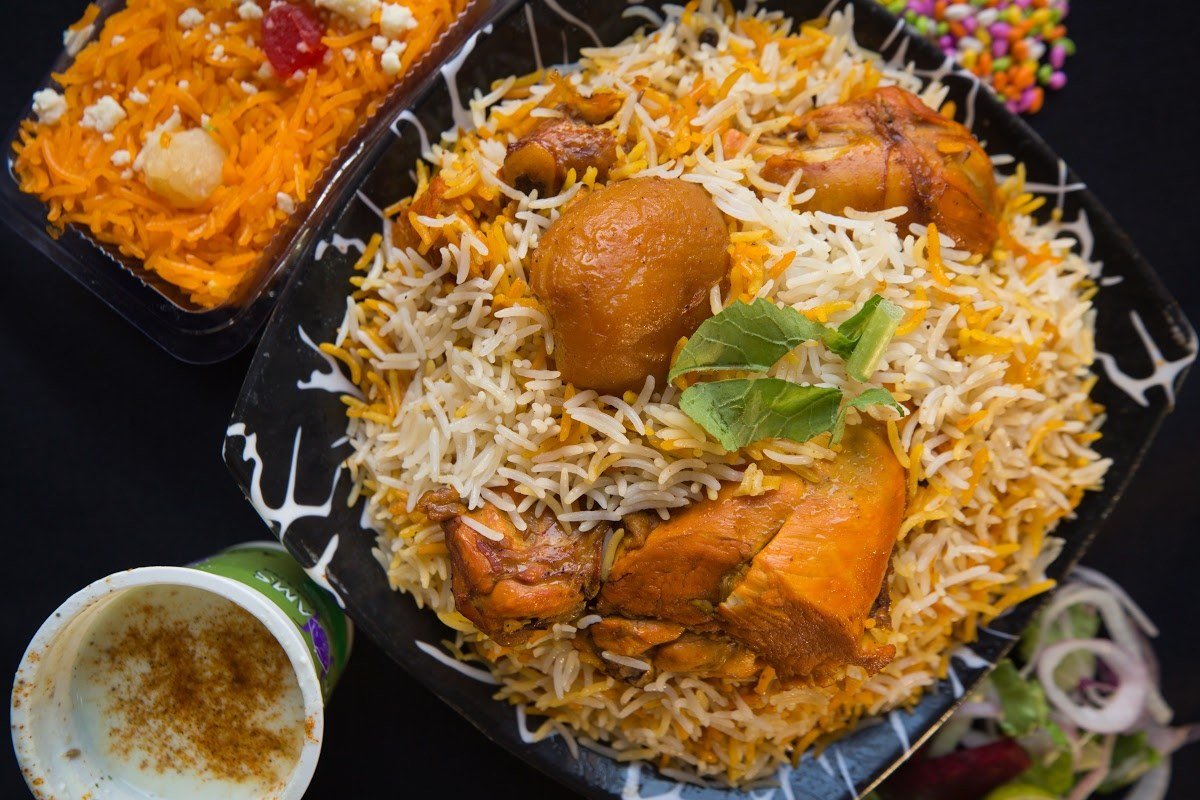
The full Karachi order at Al Rehman Biryani Centre: chicken biryani with its aloo, a cup of raita, salad on the side and zarda to finish.
Photo: SOC Films via Google Arts & Culture
That is really what Karachi biryani is: not a recipe but a shared standard, held by millions of self-appointed judges. It tastes of migration and of making a new city home, of student budgets and wedding feasts, of a street where the cauldrons have barely cooled in seventy years. And it tastes, unmistakably, of aloo.
Sources
- Dawn, Flashback: A taste of yesterday (on the birth of Café Student in Saddar, 1969)
- The Express Tribune, Karachi’s Burns Road, a hubbub of activity before Iftar
- The Express Tribune (Anadolu Agency), Pedestrianised Burns Road in Karachi brings back foodies
- Featured photo: Miansari66, CC0, via Wikimedia Commons (File: Student Biryani.JPG)
- In-body photo: Miansari66, CC0, via Wikimedia Commons (File: Karachi Beef Biryani.jpg)
- Body photo 2: SOC Films, via Google Arts & Culture (Steaming Biryani in the Degh, Al Rehman Biryani Centre, Karachi)
- Body photo 3: SOC Films, via Google Arts & Culture (A plate of Biryani, Raita & Zarda, Al Rehman Biryani Centre, Karachi)

Umar Farooq is the founder and editor of Good News Pakistan. An engineer by profession and a writer by passion, he started the site in December 2022 to share good news from Pakistan, and has since written and edited more than 200 articles about its people, sports, science, business and world records. He believes the story of Pakistan is bigger than its headlines, and that good news, told honestly, is worth telling every day.