

Pakistan is hosting the 15th Annual Meeting of the International Network for Nuclear Security Training and Support Centres, the NSSC Network meeting, in Islamabad from 23 to 26 November 2026, bringing about 68 delegates from 49 countries to the Pakistan Centre of Excellence for Nuclear Security (PCENS). The meeting, held in collaboration with the International Atomic Energy Agency (IAEA), gathers policymakers, regulators, academics and technical experts who train the people responsible for keeping nuclear material secure.
The meeting was inaugurated on Monday by Pakistan Nuclear Regulatory Authority (PNRA) Chairman Zia Hussain Shah, who stressed the central place of human resource development in nuclear security. Additional Foreign Secretary Ambassador Khalil Hussain Hashmi delivered the keynote address, reaffirming Pakistan’s commitment to nuclear security and its partnership with the IAEA, and a commemorative plaque was inaugurated as the sessions opened.
Grossi thanks Pakistan in a video address
IAEA Director General Rafael Mariano Grossi addressed the delegates by video and thanked Pakistan for hosting, saying: “The NSSC Network plays an active and crucial role in turning nuclear security from theory into effective practice.” The network links the national centres that train guards, regulators, customs officers and plant staff, so that a lesson learned in one country can raise standards in all of them.
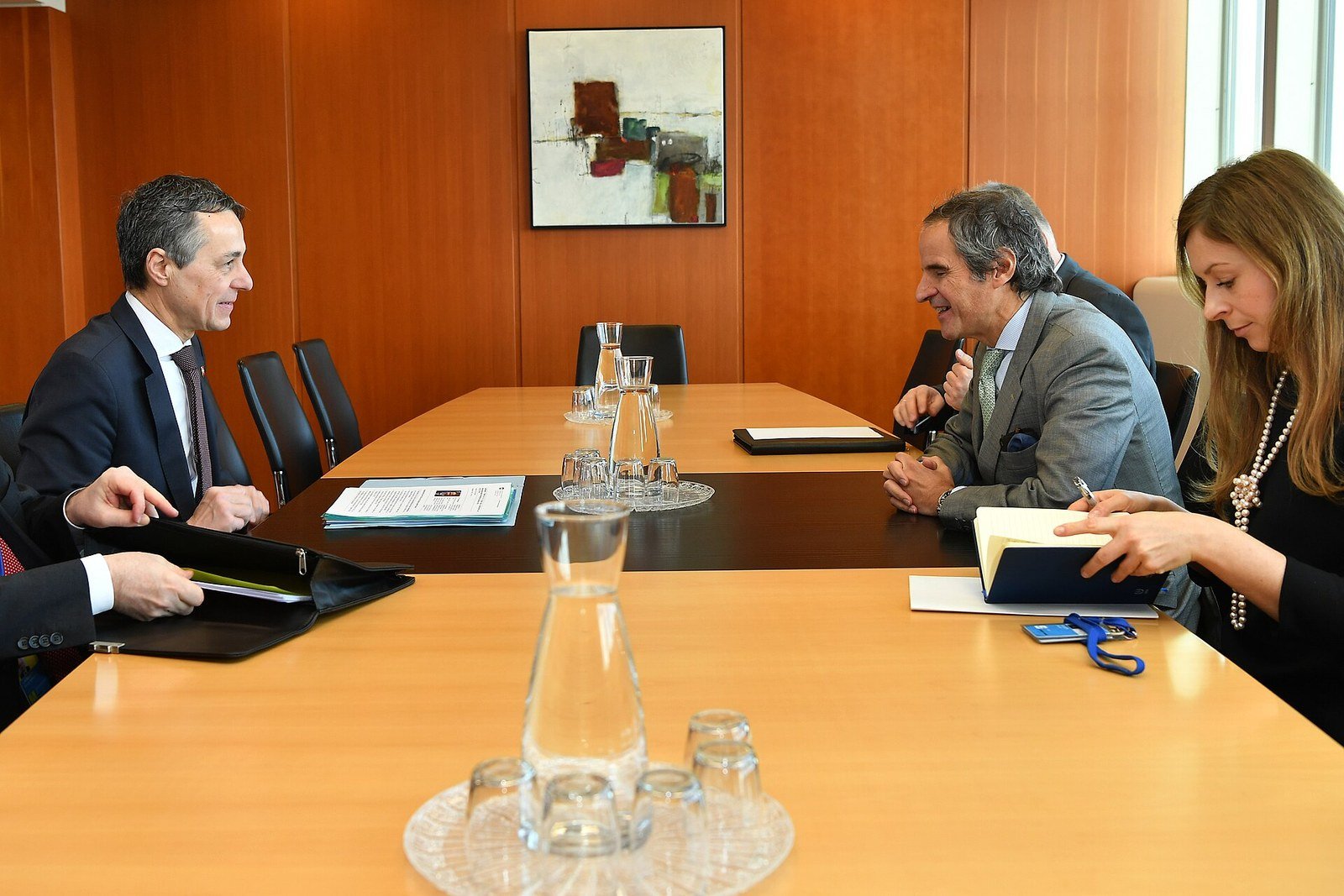
IAEA Director General Rafael Mariano Grossi, who thanked Pakistan for hosting the NSSC Network meeting in a video address to delegates. Photo: IAEA Imagebank via Wikimedia Commons (CC BY 2.0)
Training the people who keep nuclear material safe
The programme pairs technical sessions and working groups with visits to Pakistan’s own training institutions, including the National Institute of Safety and Security (NISAS) at PNRA and the Pakistan Institute of Engineering and Applied Sciences (PIEAS). For the delegates, the visit is the point of the network: PCENS and its sister institutions are working examples of how a country builds a nuclear security training system from the ground up, and Pakistan’s centres now teach students from well beyond its own borders.
Why training sits at the centre of nuclear security
Nuclear security is usually discussed in terms of fences, sensors and armed guards, but the network’s premise is that all of it depends on trained people. Nuclear Security Support Centres are the institutions that turn that premise into practice: they run the courses, maintain the equipment libraries and set the standards for everyone from plant protection staff to border officers checking cargo for radioactive material. A country with a strong centre can train its own people to an international standard, and then teach others, which is the role Pakistan’s PCENS has grown into since it was established.
That is also why the meeting’s attendance list matters. About 68 delegates from 49 countries is close to the whole active membership of the network, and the mix of policymakers, regulators, academics and technical experts reflects how many professions have a hand in keeping nuclear and radioactive material out of the wrong hands.
The NSSC Network meeting returns to Islamabad after ten years
Pakistan last hosted this meeting in 2016, when it became the first annual meeting of the network ever held outside the IAEA’s headquarters in Vienna. Hosting again a decade later, with delegates from 49 countries in the room, underlines how far that system has come. The NSSC Network meeting closes on 26 November, with working groups expected to agree the network’s training and support priorities for the year ahead.
Sources
- The News (APP), Pakistan to host NSSC Network meeting
- Dawn, Pakistan hosts IAEA nuclear security network meeting
- The Nation, Pakistan hosts global nuclear security meeting
- Featured photo: Reuters via The News (the IAEA logo at the agency’s Vienna headquarters)
- In-body photo: IAEA Imagebank via Wikimedia Commons, CC BY 2.0 (IAEA Director General Rafael Mariano Grossi)

Umar Farooq is the founder and editor of Good News Pakistan. An engineer by profession and a writer by passion, he started the site in December 2022 to share good news from Pakistan, and has since written and edited more than 200 articles about its people, sports, science, business and world records. He believes the story of Pakistan is bigger than its headlines, and that good news, told honestly, is worth telling every day.
- Umar Farooq
- Umar Farooq
- Umar Farooq
- Umar Farooq
- Umar Farooq