

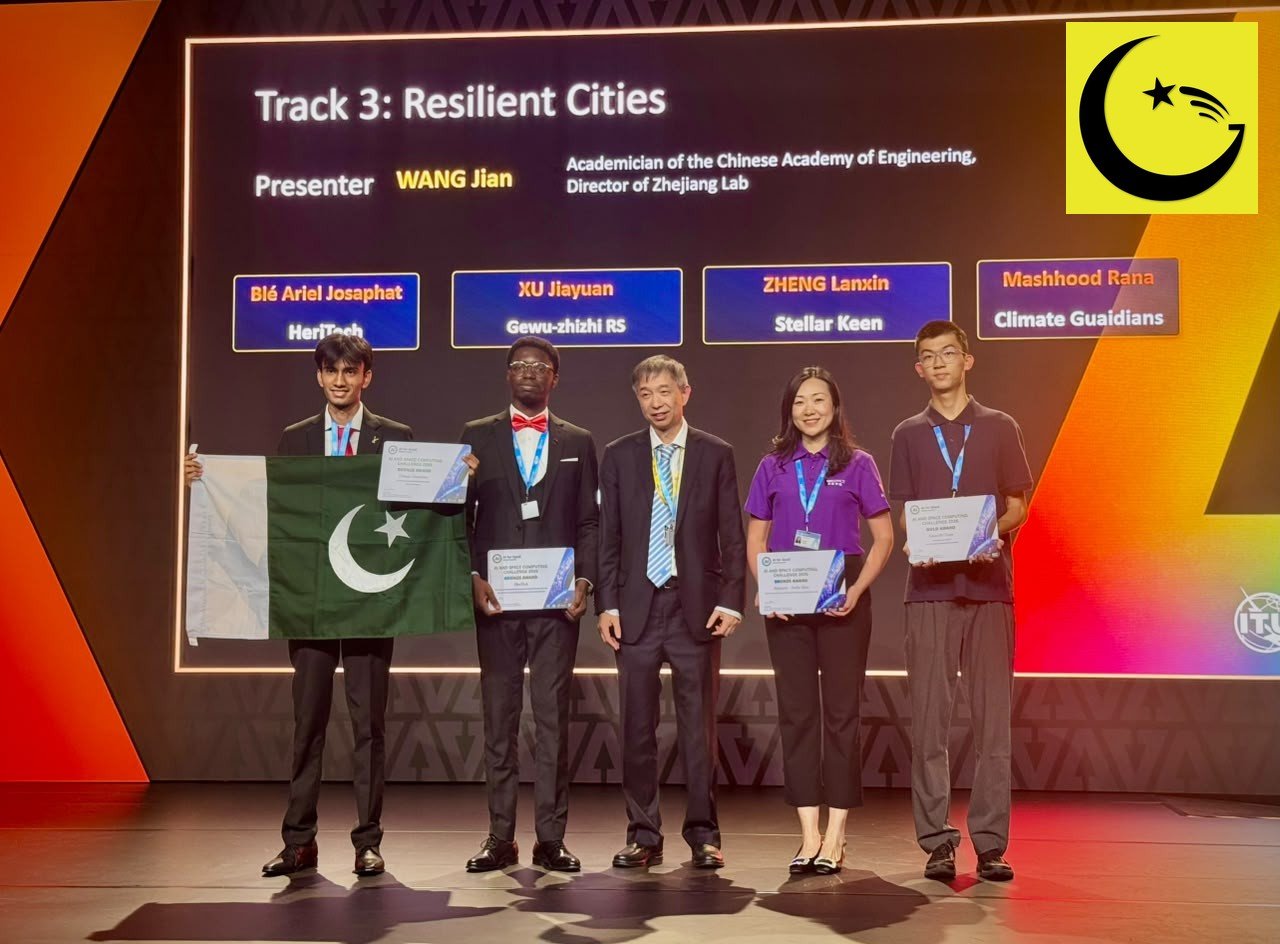
Two computer science students from the Institute of Space Technology (IST) in Islamabad, Ali Aoun Mehdi and Mashhood Rana, won the Bronze Award at the AI and Space Computing Challenge 2026, with the winners announced at the ITU AI for Good Global Summit in Geneva on 7 July 2026. Their team, Climate Guardians, took third place in Track 3 of the challenge, which asked entrants to use artificial intelligence and satellite data to make cities more resilient.
The field they beat most of was large: more than 270 teams from over 40 countries entered the challenge, and 106 teams reached the final round. Climate Guardians’ bronze came in the track formally titled “Space Intelligence Enabling Resilient Urban Environments”, where 23 teams reached the final and five teams shared the Bronze Award, among them the two students from IST.
Bronze in the AI and Space Computing Challenge’s resilient cities track
Ali Aoun Mehdi represented the team in Geneva and held the Pakistan flag on stage as the Track 3 awards were presented, standing alongside winners from the track’s other teams. The moment capped a competition run through the ITU’s AI for Good initiative and co-hosted by Zhejiang Lab, built around the Three-Body Computing Constellation, a space-based computing network designed to process data in orbit rather than waiting for it to reach the ground.
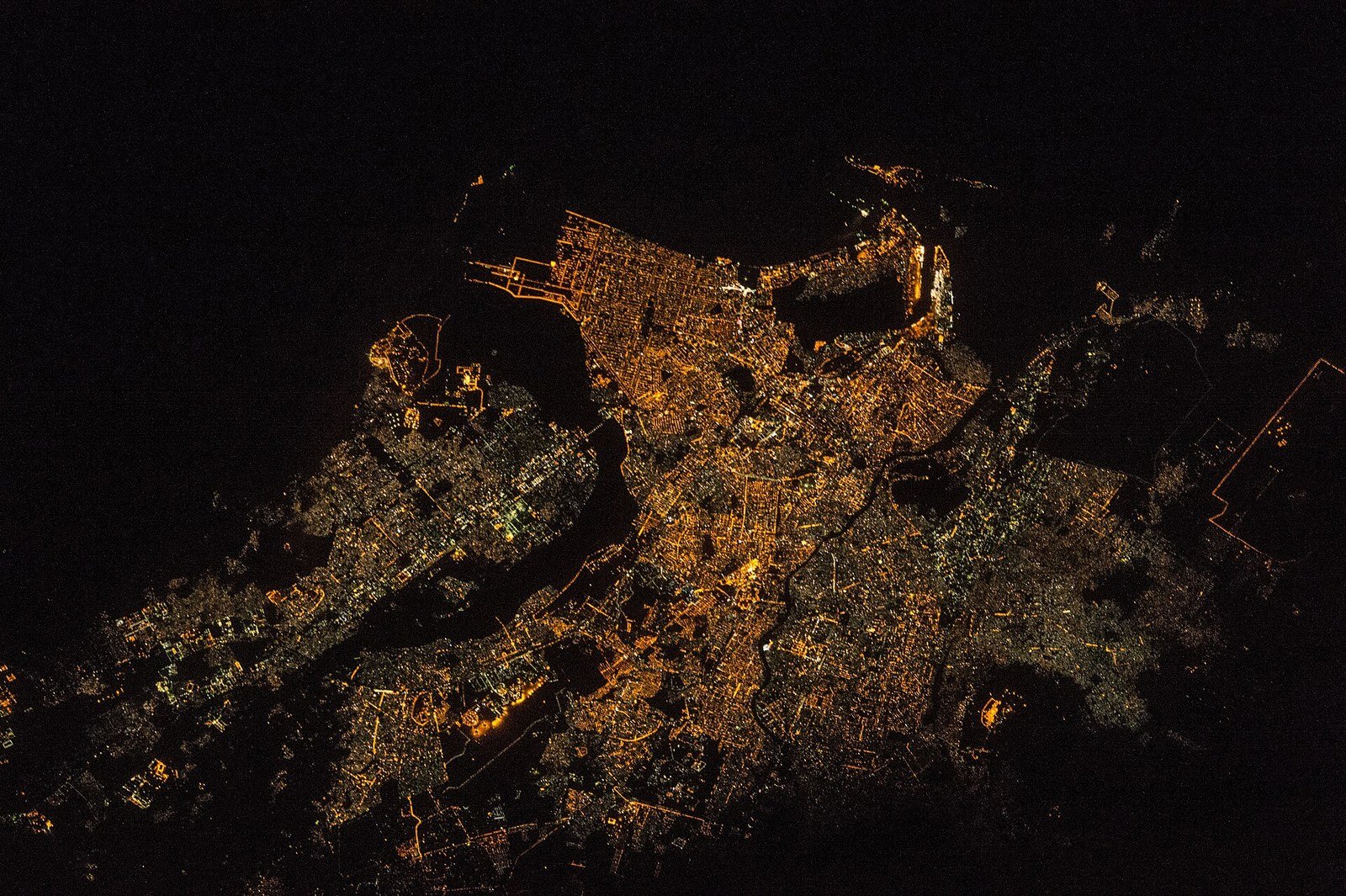
Karachi seen from the International Space Station. The AI and Space Computing Challenge used AI and Earth observation data to plan safer, more resilient cities. Photo: NASA
A contest built on real satellite data
The challenge set teams to work on three practical problems: food security, water quality and resilient cities, all using AI models fed with Earth observation data. Judging weighted model performance at 60 percent and the feasibility of the proposed solution at 40 percent, so a winning entry had to be not only accurate but buildable. Climate Guardians’ entry for the cities track was judged good enough on both counts to take a podium place against university and research teams from around the world.
A home institution built for space
The result also reflects the institution behind the students. The Institute of Space Technology in Islamabad is Pakistan’s specialist university for space science and engineering, set up to supply the country’s space programme with trained scientists and engineers. Its students work with satellite data as a matter of routine, which is precisely the skill set the Geneva challenge tested: taking Earth observation feeds and turning them into decisions a city can act on, from flood exposure to heat stress and water quality. For Mehdi and Rana, the competition was an extension of their coursework; for the field of more than 270 teams, that turned out to be enough for a podium finish.
The summit setting added weight to the award. The AI for Good Global Summit is the United Nations’ main platform for applied artificial intelligence, and its challenge finals put student teams in front of the same audience of agencies, researchers and companies that set the field’s direction. A bronze there is the kind of result that follows its winners into laboratories and job interviews for years.
Why a July win still matters in November
Space computing is where Pakistan’s space ambitions and its climate needs meet. The country lives with floods, heatwaves and strained water supplies, and the same satellite data the challenge used is the data Pakistani planners need. That two IST undergraduates stood on a Geneva stage with the national flag, in a field of more than 270 teams, is a marker of where the institute’s teaching has reached, and a July result worth recording properly.
Sources
- Institute of Space Technology, IST students win Bronze Award at AI and Space Computing Challenge 2026
- ITU AI for Good, From orbit to impact: celebrating the winners of the AI and Space Computing Challenge
- Featured photo: Institute of Space Technology (the Track 3 awards on stage in Geneva)
- In-body photo: NASA (Karachi photographed from the International Space Station)

Umar Farooq is the founder and editor of Good News Pakistan. An engineer by profession and a writer by passion, he started the site in December 2022 to share good news from Pakistan, and has since written and edited more than 200 articles about its people, sports, science, business and world records. He believes the story of Pakistan is bigger than its headlines, and that good news, told honestly, is worth telling every day.
- Umar Farooq
- Umar Farooq
- Umar Farooq
- Umar Farooq
- Umar Farooq