

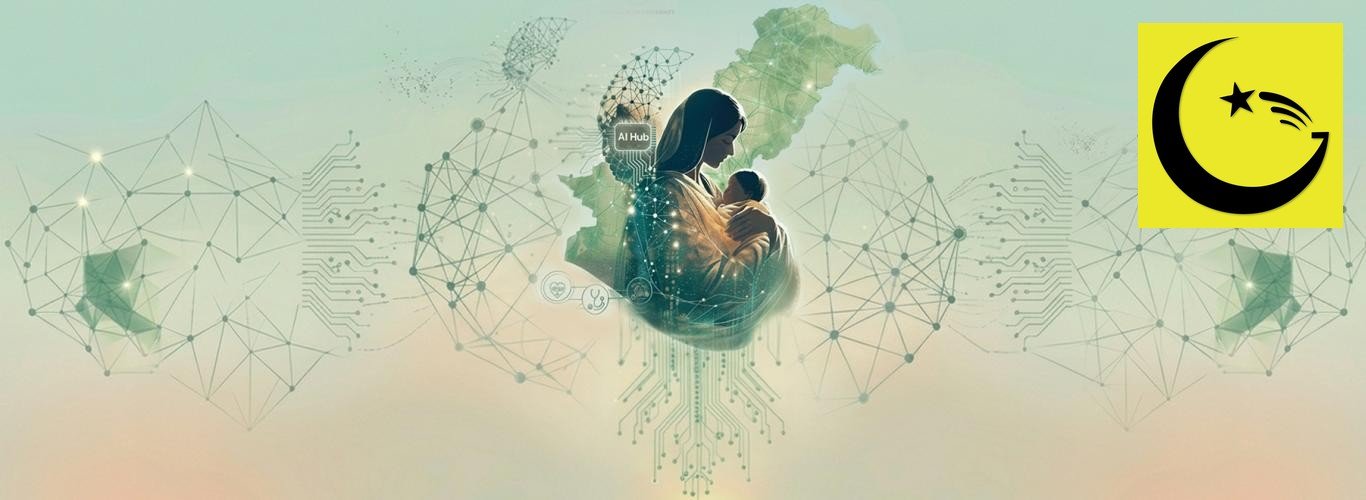
At LUMS in Lahore, Pakistan’s first nationally coordinated artificial intelligence hub is at work on the country’s most urgent health challenge. The LUMS National AI Hub, based at the Syed Babar Ali School of Science and Engineering, is building AI tools to protect mothers, newborns and children, with Aga Khan University as its clinical partner and a brief to grow into a long-term national platform.
The Hub was established with a multi-year grant from the Gates Foundation, awarded in March 2026, with additional support from Mubarik Imam, a member of the SBASSE Advisory Board. Its work has been gathering pace through the year: in November 2026 it signed a memorandum of understanding with the Punjab Office of AI, tying its research directly into the province’s public systems. It is designed, in LUMS’s words, to move beyond proof-of-concept pilots and deliver impact at a national scale.
What the LUMS National AI Hub actually does
The Hub’s tools are built for the frontline of Pakistani healthcare, where a small number of specialists serve enormous populations:
- AI-enabled risk prediction and decision-support systems that help frontline health workers spot dangerous pregnancies and complications early.
- Speech-based and multilingual tools that bridge the language and literacy barriers between health workers, records and patients.
- Stronger referral and follow-up mechanisms, so a woman flagged as high-risk in a village actually reaches the care she needs in time.
- Frameworks to make health data systems work together, and predictive analytics to strengthen prevention, early diagnosis and continuity of care.
Two universities, one system
The Hub is led by Dr Maryam Mustafa, Associate Professor of Computer Science at SBASSE, with Professor Fyezah Jehan, Chair of the Department of Paediatrics and Child Health at Aga Khan University, collaborating closely on clinical design and implementation. LUMS brings its expertise in artificial intelligence, language technologies, gender and technology research and digital public health; AKU contributes large maternal health datasets, clinical expertise and the field testing of AI tools across diverse care settings. Government partners, clinicians, researchers, policymakers and innovators are being convened around the same table.

The Aga Khan University in Karachi, the clinical partner bringing datasets, expertise and field testing to the Hub. Photo: Kashif Mardani via Wikimedia Commons (CC BY 2.0)
Built on Awaaz-e-Sehat
The Hub grows out of an earlier success: Awaaz-e-Sehat, a Grand Challenges project led by Dr Maryam Mustafa that empowered maternal healthcare through voice-enabled electronic record management, showing how voice technology and multilingual interfaces can support frontline health workers and improve continuity of care in low-resource settings. The LUMS National AI Hub takes that lesson and builds the national platform around it.
The stakes: 186 mothers in every 100,000
Pakistan’s maternal mortality rate stands at 186 deaths per 100,000 live births, among the highest in the region, driven by limited access to quality antenatal, delivery and postnatal care, shortages of skilled health workers, weak referral systems and delays in managing complications such as haemorrhage, eclampsia and sepsis. Language and literacy barriers, fragmented health data and social and economic constraints delay care further. “This is a milestone moment for both LUMS and Pakistan,” said Dr Maryam Mustafa. “We are launching this Hub with maternal, newborn, and child health because this is where the need is most urgent and the opportunity for immediate impact is greatest.”
READ MORE
NADRA Pilots Digital Nikah Registration in Islamabad and Quetta
Why this is good news for Pakistan
Artificial intelligence built for Pakistani wards, in Pakistani languages, by Pakistani researchers, is a different proposition from imported software. As supporter Mubarik Imam put it, AI can democratise world-class medical knowledge for frontline health workers “from Astore to Ziarat”. The Hub also puts Pakistan in a small international group: the Gates Foundation is backing similar AI Scaling Hubs in Rwanda, Nigeria, Senegal and Kenya, and Pakistan’s is built from the start as national infrastructure, with capacity building, AI governance, policy work and support for startups in its remit, and a design that can extend from health into other sectors. For a mother in a remote village, the promise is concrete: earlier warning of a risky pregnancy, and a faster road to help when minutes decide outcomes.
Sources
- LUMS, Pakistan’s first National AI Hub, launching with a flagship focus on maternal, newborn and child health
- The Verge Pakistan, Inside LUMS SBASSE research labs
- Featured image: LUMS (official artwork of the National AI Hub)
- In-body photo: Kashif Mardani via Wikimedia Commons, CC BY 2.0 (Aga Khan University, Karachi)

Umar Farooq is the founder and editor of Good News Pakistan. An engineer by profession and a writer by passion, he started the site in December 2022 to share good news from Pakistan, and has since written and edited more than 200 articles about its people, sports, science, business and world records. He believes the story of Pakistan is bigger than its headlines, and that good news, told honestly, is worth telling every day.
- Umar Farooq
- Umar Farooq
- Umar Farooq
- Umar Farooq
- Umar Farooq