

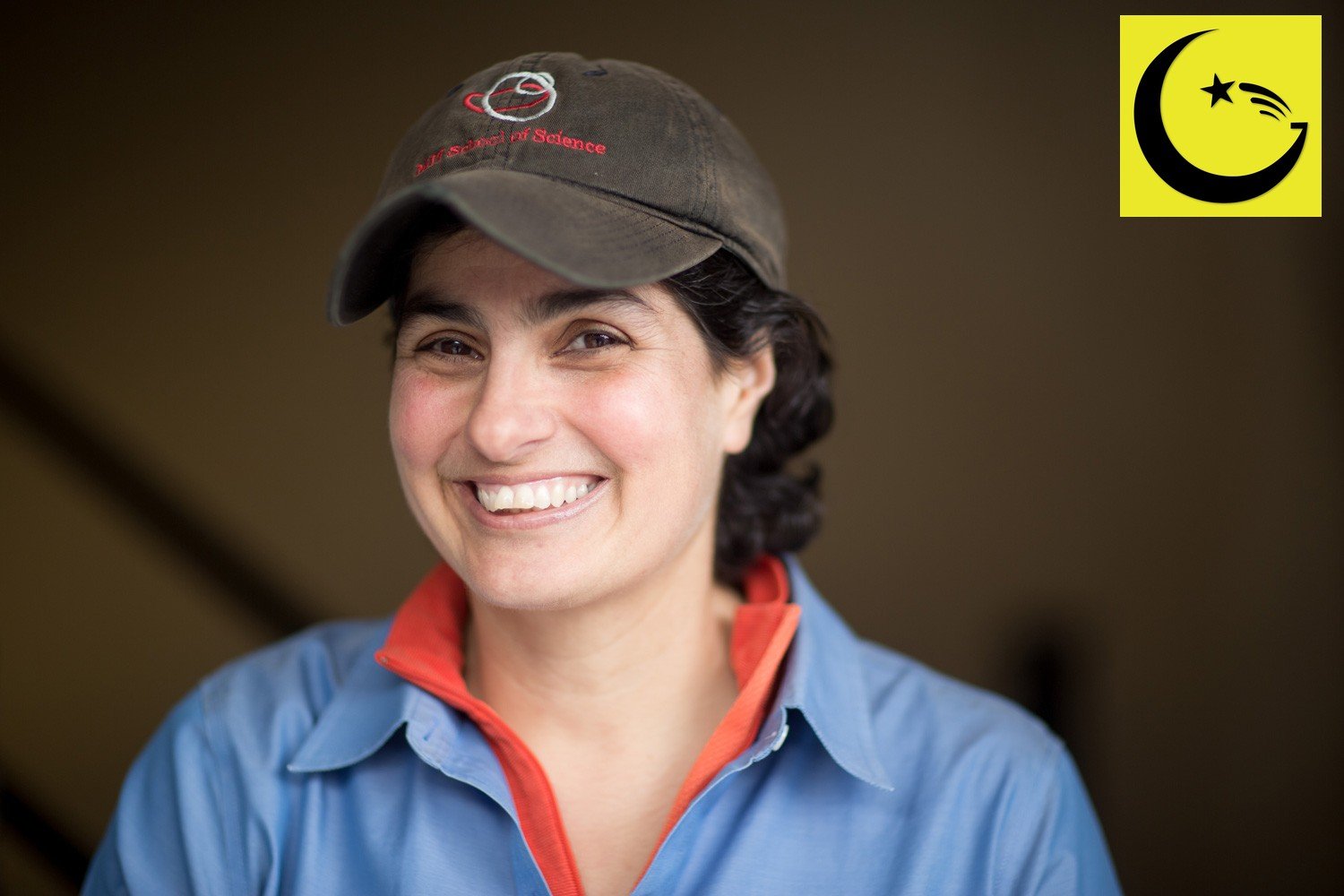
Nergis Mavalvala, born in Lahore and raised in Karachi, became the first woman dean of the MIT School of Science in 2020, after helping to achieve the first direct detection of gravitational waves. In September 2026 she came home to Karachi, where a packed hall at Habib University heard her describe curiosity as the starting point of discovery, and access to opportunity as what decides who gets to follow it.
In this article: From a Karachi classroom to MIT; Listening to the universe; Leading one of the world’s great science schools; A homecoming in Karachi; Why this is good news for Pakistan
From a Karachi Classroom to MIT
Mavalvala studied at the Convent of Jesus and Mary in Karachi before leaving for the United States, where she earned her undergraduate degree at Wellesley College and her doctorate at MIT in 1997. As a doctoral student she worked with Rainer Weiss on the first prototypes of the detectors that would one day hear gravitational waves. When Weiss described a quest that needed measuring changes in spacetime smaller than a thousandth of a proton, and asked what she could do, she told him she could fix bicycles. She stayed, and learned to build the instruments instead. A MacArthur Fellowship followed in 2010, and she is a member of the United States National Academy of Sciences.
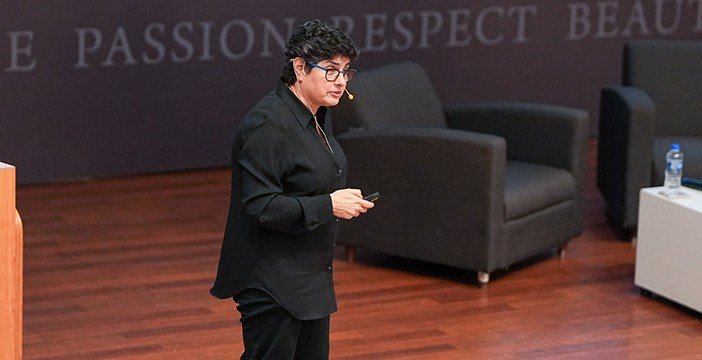
Nergis Mavalvala delivering the 10th Yohsin Lecture at Habib University in Karachi on 25 September 2026. Photo: Habib University
Listening to the Universe
In 1916 Albert Einstein predicted that violent events in space would send ripples through spacetime, called gravitational waves. He doubted they could ever be detected, because the ripples are so faint. A century later, the Laser Interferometer Gravitational-Wave Observatory, known as LIGO, built detectors that could sense a passing wave shaking their mirrors by less than the width of an atom. The signal arrived in September 2015, from two colliding black holes, and the LIGO team announced the first direct detection in February 2016. It confirmed Einstein’s century-old prediction, and it opened a new way of studying the universe: for the first time astronomers did not need light to observe it. They could listen to gravity itself.
Mavalvala had spent her career on the precision of the instruments that made that hearing possible, and she was a longtime member of the LIGO team behind it. The 2017 Nobel Prize in Physics went to three founding scientists, Rainer Weiss, Barry Barish and Kip Thorne. Mavalvala is part of that team, and she is not herself a Nobel laureate, a distinction some reports get wrong. Speaking in Karachi, she put the scale of the work plainly: the collaboration counted more than 2,000 members, from more than 400 universities in 22 countries.
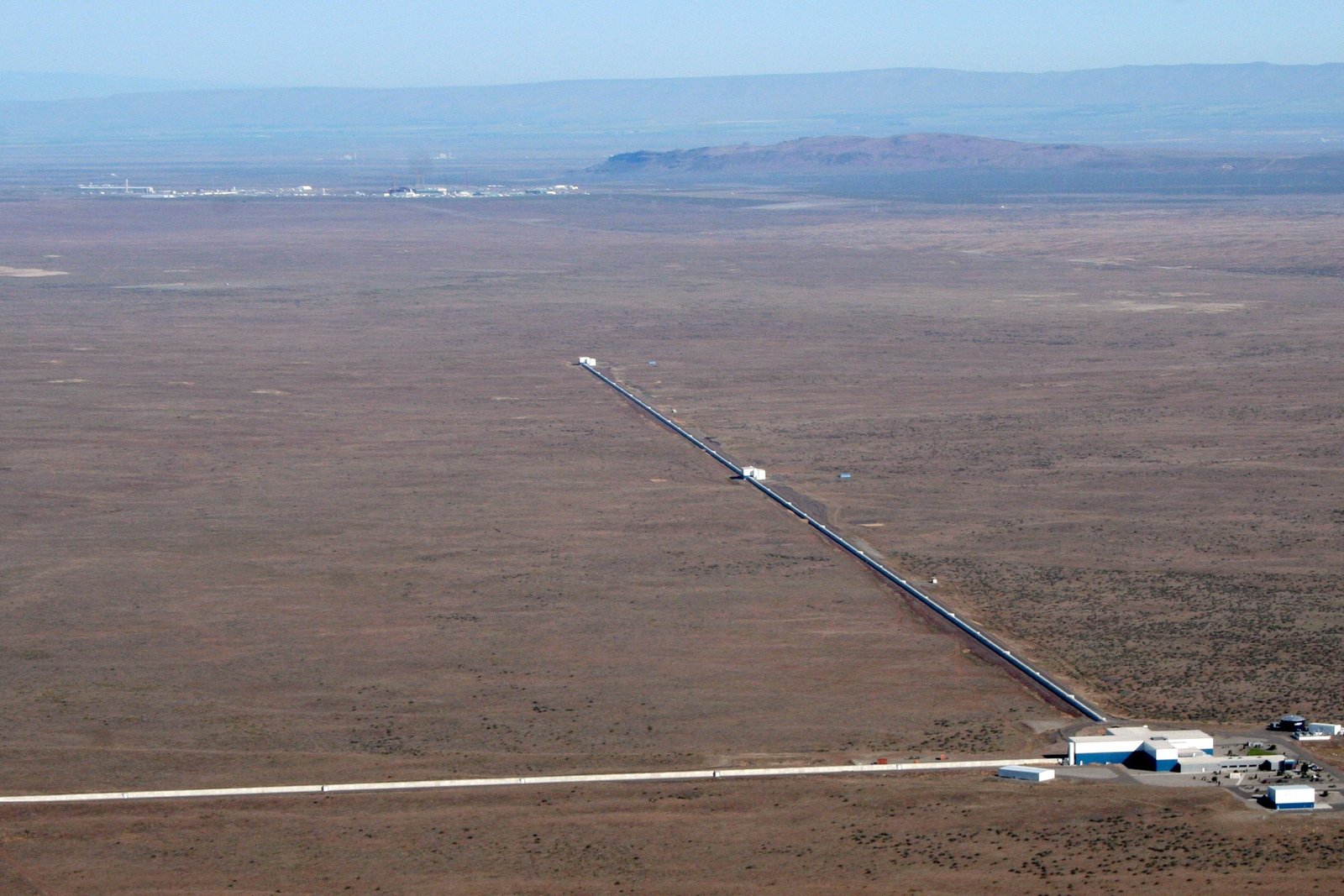
A LIGO detector observatory, part of the instrument network that first heard gravitational waves. Photo: LIGO Laboratory
Leading One of the World’s Great Science Schools
On 1 September 2020 Mavalvala became the 11th Dean of the MIT School of Science, and the first woman to hold the post. She still holds it today, listed on MIT’s leadership page as Dean, and the Winter 2026 issue of Science@MIT carries a Letter from the Dean signed by her. She is also the Curtis and Kathleen Marble Professor of Astrophysics and a principal investigator at the MIT Kavli Institute. In August 2026 Forbes named her on its 50 Over 50 list for innovation. That a physicist raised in Karachi now leads one of the world’s great science schools is the fact at the heart of this article, and it is still true today.
Nergis Mavalvala Comes Home to Karachi
Mavalvala returned to Karachi in September 2026 to deliver the 10th Yohsin Lecture at Habib University on Friday 25 September, titled The Joy of Discovery: Curiosity, Science, and the Pivotal Role of Universities. Habib’s founding president, Wasif Rizvi, welcomed her with the words, “Nergis, welcome home.” The visit was built around more than the lecture. On the morning of 25 September she sat with more than 40 scientists and academics from over 20 institutions across Pakistan, asking what it would take for scientists to do first-rate research from within Pakistan. She also had dinner with the university’s Mohsineen supporters on 24 September, visited Cedar College on 23 September, and met an Aitchison College delegation on 29 September.
Her message was the same in the lecture and in those smaller rooms. “Every single person at birth is research-minded,” she told the audience. “The reason some of us get to do it in adulthood is access to opportunity.” And on funding science, she was direct: “Research has shown there is no investment that any government does that has greater return than investment in research and science.” She closed by calling universities “absolute engines of discovery”, generating knowledge, cultivating talent and giving societies resilience.
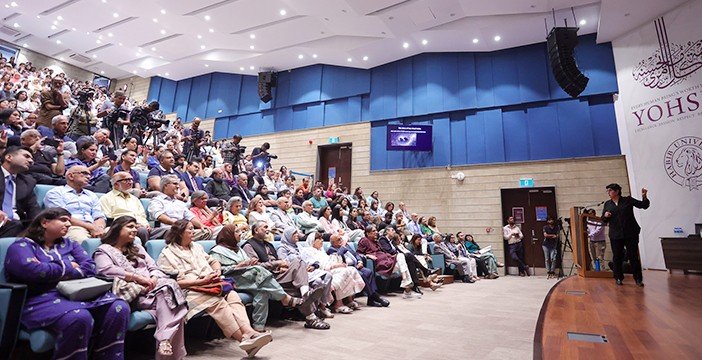
Nergis Mavalvala with scientists from across Pakistan at Habib University during her September 2026 visit. Photo: Habib University
Why This Is Good News for Pakistan
This story matters for Pakistan because it is about a beginning, not only an ending. A girl who sat in a Karachi classroom now leads one of the world’s great science schools, and she came back to say so in person, to students sitting where she once sat. Her visit did not only celebrate a famous name. It put scientists from more than 20 Pakistani institutions in one room, talking about how to build research at home instead of only admiring it abroad. She does not say Pakistan lacks talent. She says talent is everywhere at birth, and what decides who gets to use it is opportunity: a school that teaches curiosity, a university that funds it, a government that treats research as an investment with the highest return. Pakistan has the first part in abundance. Her homecoming was a reminder, from one of its own, that the rest is a choice the country can still make.
Sources
- MIT News, Nergis Mavalvala named dean of the MIT School of Science, 2020
- MIT School of Science, leadership page
- Habib University, Dr Nergis Mavalvala on Gravitational Waves, 10th Yohsin Lecture, 28 September 2026
- Habib University, Habib University Convenes Pakistan’s leading Scientists with Dr Nergis Mavalvala, 29 September 2026
- Habib University, The Gravity of Giving: Welcoming Dr Nergis Mavalvala, September 2026
- Aitchison College, delegation meets Dr Nergis Mavalvala, 29 September 2026
- Featured photo: MIT News, Massachusetts Institute of Technology
- In-body photos: Habib University (lecture and scientists session); LIGO Laboratory (detector observatory)

Umar Farooq is the founder and editor of Good News Pakistan. An engineer by profession and a writer by passion, he started the site in December 2022 to share good news from Pakistan, and has since written and edited more than 200 articles about its people, sports, science, business and world records. He believes the story of Pakistan is bigger than its headlines, and that good news, told honestly, is worth telling every day.