

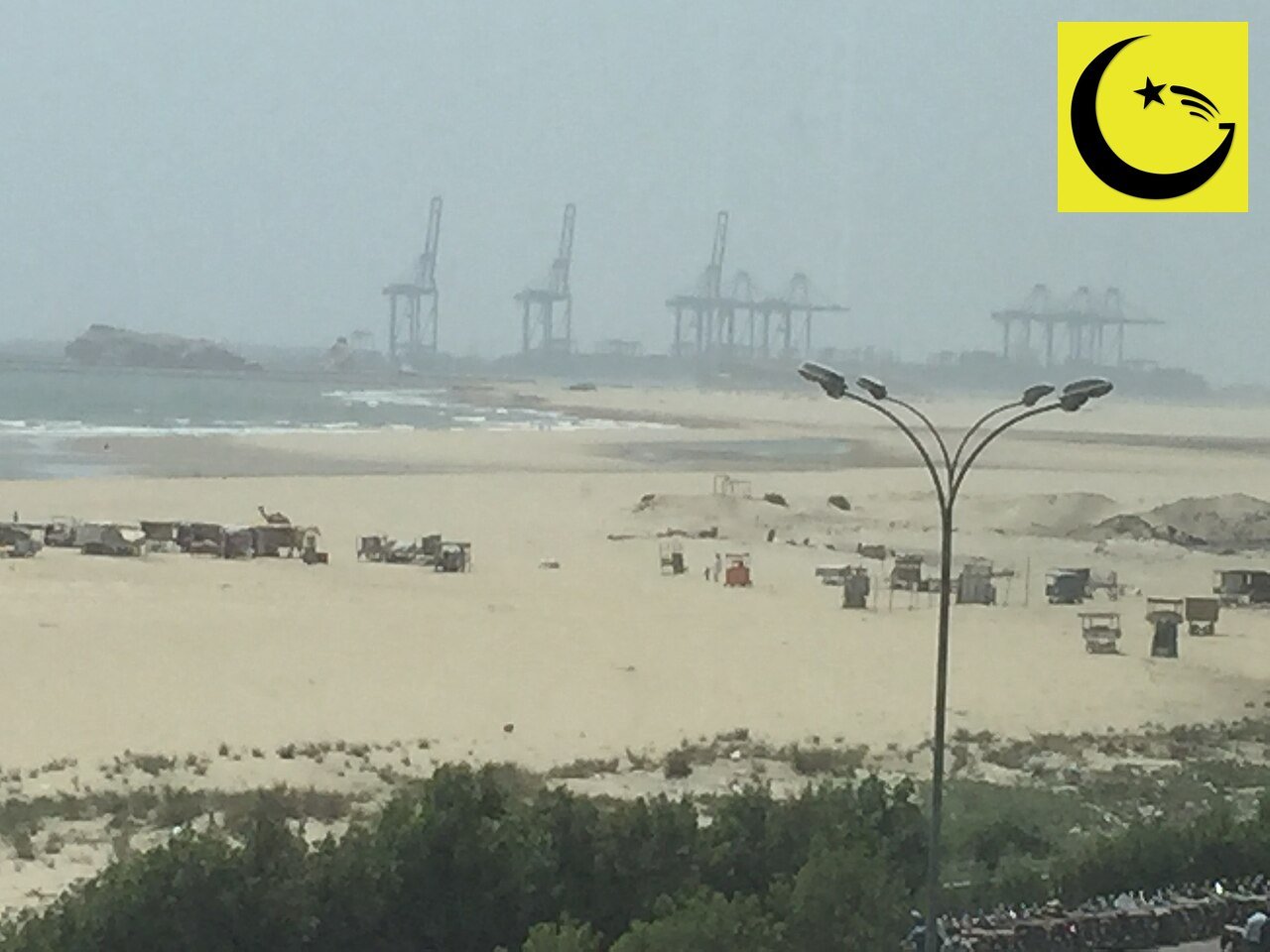
A new maritime engineering institute in Gwadar will train young people for the specialised jobs of a working deep-sea port, under a memorandum of understanding signed by four Pakistani and Chinese institutions. Federal Minister for Maritime Affairs Muhammad Junaid Anwar Chaudhry announced the plan while chairing a pre-board meeting of the Gwadar Port Authority, where development projects and technical education initiatives for the port city were reviewed. The institute, to be called the Pakistan Overseas Engineering and Technology Institute, is meant to give Gwadar and Balochistan a homegrown supply of technicians, engineers and officers for the port, shipping and maritime industries.
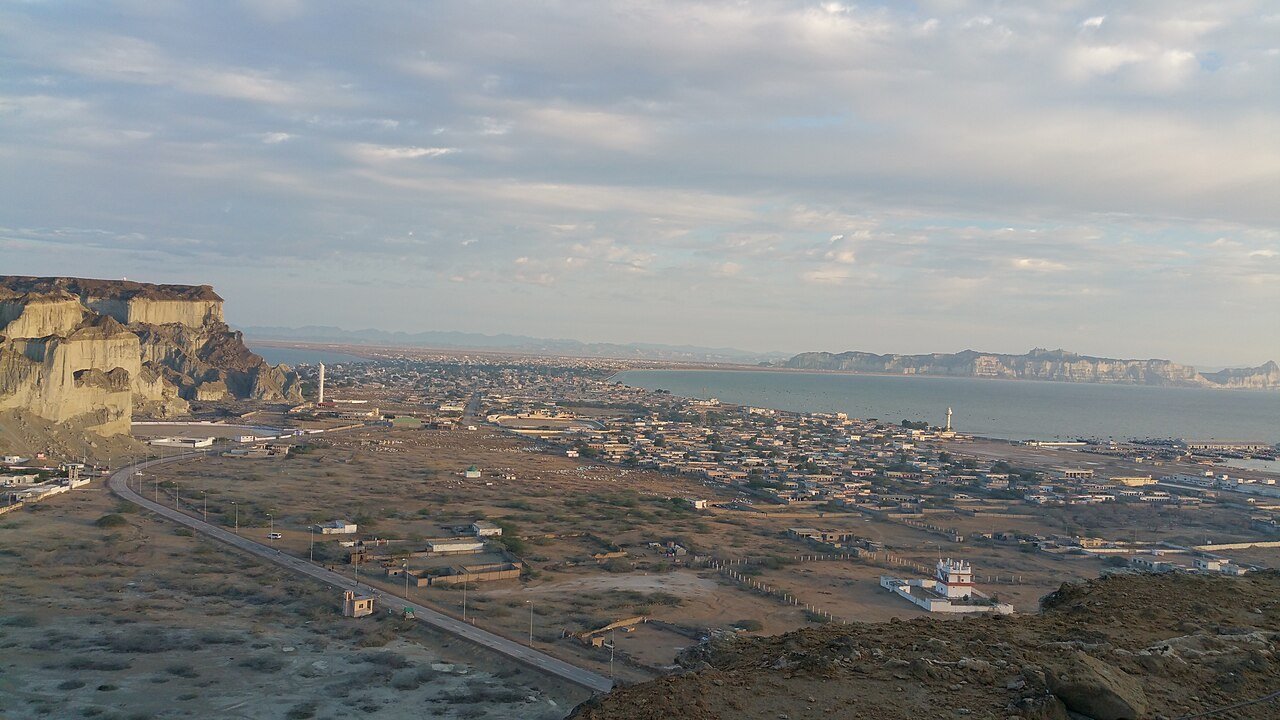
Gwadar Port, its breakwater and the Arabian Sea coastline from above.
Photo: Madihasalam, CC BY-SA 4.0, via Wikimedia Commons
Four Institutions Behind the Maritime Engineering Institute in Gwadar
Briefing the meeting, Gwadar Port Authority Chairman Noorul Haq Baloch said the MoU was signed by the Gwadar Port Authority, the Pak-China Technical and Vocational Institute, the University of Gwadar and China’s Qingdao Harbour Vocational and Technical College. The four partners will work under a five-year cooperation framework running from 2026 to 2030. Within that framework, the institutions will collaborate on academic programmes, curriculum development, skills training, faculty development, joint research and practical learning, so that what is taught in the classroom matches what a modern port actually needs on the quay and at sea.
Welcoming the initiative, the maritime affairs minister said the agreement would lay the foundation for specialised maritime education, technical training and human resource development in the region. He stressed that technical education should be aligned with the operational requirements of ports and the maritime industry, and described the MoU as an important milestone in Pakistan-China educational cooperation. He also expressed optimism that the involvement of China’s Shandong Port Group, working with the University of Gwadar, would strengthen industry-academia linkages by giving students technical expertise and practical exposure inside a working port environment.
Skills for Ships, Ports and Shipyards
The proposed curriculum of the maritime engineering institute in Gwadar covers five core disciplines: navigation technology, marine engineering, maritime safety, ship technology and port machinery. Together, these subjects map closely onto the real staffing needs of a commercial port, from the officers who guide vessels in and out of the harbour, to the engineers who keep cranes, tugs and terminal machinery running, to the safety specialists who keep cargo operations compliant with international standards. Qingdao Harbour Vocational and Technical College brings direct experience of training workers for one of China’s busiest port regions, and that experience will feed into the curriculum and into faculty development for the Pakistani partners.
The partner institutions will now develop the academic programmes and curricula under the framework. No admissions schedule or student intake figure was announced in the official release, and no investment figure has been published, so the first concrete signs to watch for will be the programme list and the faculty exchange arrangements between Gwadar and Qingdao.
Why This Institute Matters for Pakistan
Gwadar’s promise has always rested on more than concrete and cranes. A deep-sea port only creates lasting prosperity when the people who live around it hold the skills to run it, and too often in the past those skilled roles at Pakistani ports have gone to workers brought in from elsewhere. An institute that trains young people from Gwadar and wider Balochistan in navigation, marine engineering and port machinery changes that equation: it turns the port from a project happening near a community into an employer drawing directly from it. The minister made the same point, saying that equipping the youth of Gwadar and Balochistan with industry-relevant skills would improve employment prospects, support economic growth and build a skilled workforce for emerging industries.
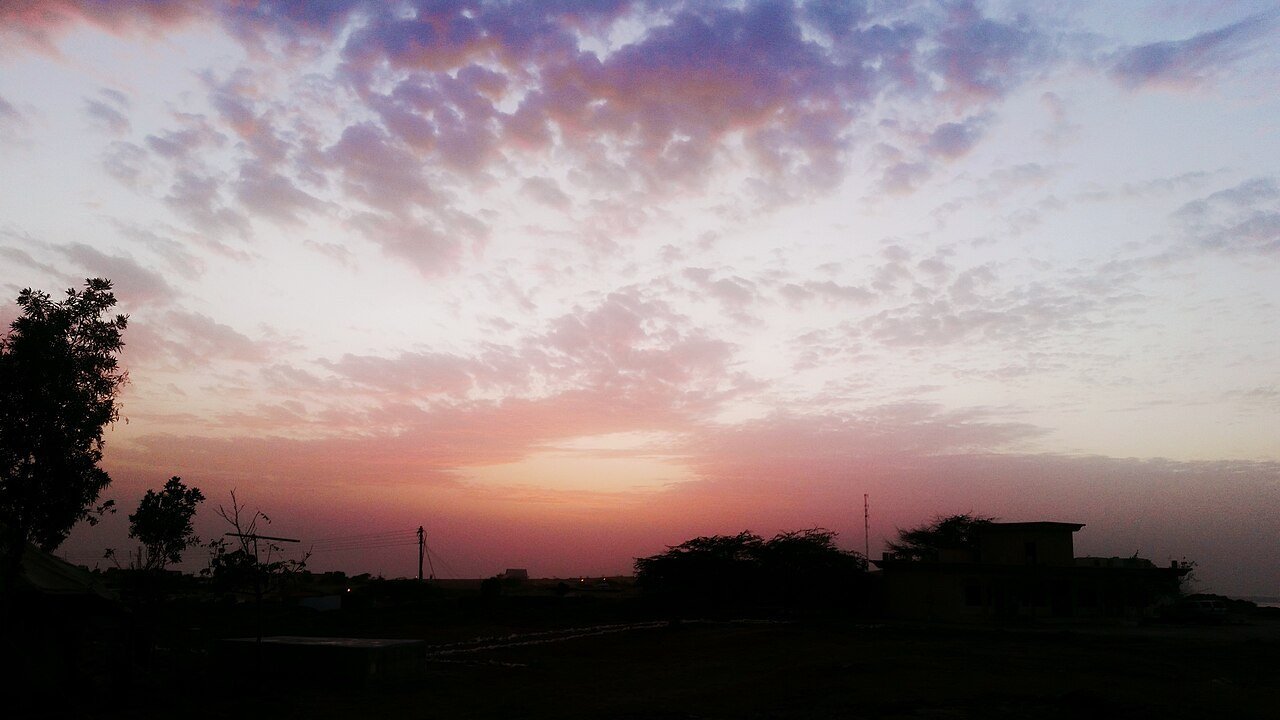
Sunset over the water at Gwadar, with the fishing harbour and headland silhouetted.
Photo: Syed Jalal Ghazi, CC BY-SA 4.0, via Wikimedia Commons
There is also a wider national gain. Pakistan’s shipping and port sectors face a growing need for certified maritime professionals as trade volumes rise and port operations modernise. A dedicated institute in Gwadar, built with an experienced Chinese port college and anchored by the University of Gwadar and the existing Pak-China Technical and Vocational Institute, gives Pakistan a permanent pipeline of that talent on its own coastline. If the 2026 to 2030 framework delivers even part of its ambition, the classes that begin in Gwadar this decade could be crewing ships, running terminals and maintaining ports across the region for decades to come.
Sources
Pakistan Information Department (PID), official press release on the Gwadar institute MoU
TechJuice: Pakistan, China to Establish Maritime Institute in Gwadar
Photo credits: Featured photo, Gwadar Port cranes seen from Gwadar Beach, by Insia.rakla, CC BY-SA 4.0, via Wikimedia Commons. Body photo 1, Gwadar Port from above, by Madihasalam, CC BY-SA 4.0, via Wikimedia Commons. Body photo 2, sunset over Gwadar bay, by Syed Jalal Ghazi, CC BY-SA 4.0, via Wikimedia Commons.

Umar Farooq is the founder and editor of Good News Pakistan. An engineer by profession and a writer by passion, he started the site in December 2022 to share good news from Pakistan, and has since written and edited more than 200 articles about its people, sports, science, business and world records. He believes the story of Pakistan is bigger than its headlines, and that good news, told honestly, is worth telling every day.