

Pakistan and the Republic of Korea have launched a three-year programme for World Heritage conservation in Pakistan, starting with a four-day training course in Islamabad that put Pakistani heritage staff in a classroom with international experts and then took them to Taxila to practise on a real site. The Capacity Building Programme for the Conservation and Management of World Heritage in Pakistan ran from 23 to 26 November.
The programme is organised by the Department of Archaeology and Museums, under the Ministry of National Heritage and Culture, together with the Korea Heritage Agency. Korean Ambassador Han Sung-ho and Secretary Asad Rehman Gilani attended the opening ceremony. It is the first year of a three-year cooperation framework running from 2026 to 2028, inside a wider Korea-Pakistan heritage partnership planned to 2030.
World Heritage conservation in Pakistan: what the four days covered
Day one was a Town Hall meeting that reviewed how Pakistan currently manages its World Heritage Sites: who is responsible, what plans exist, and where the gaps are. Three international experts then led sessions on the UNESCO World Heritage Convention, the idea of Outstanding Universal Value that gets a site inscribed, management planning, conservation methods and threat analysis.
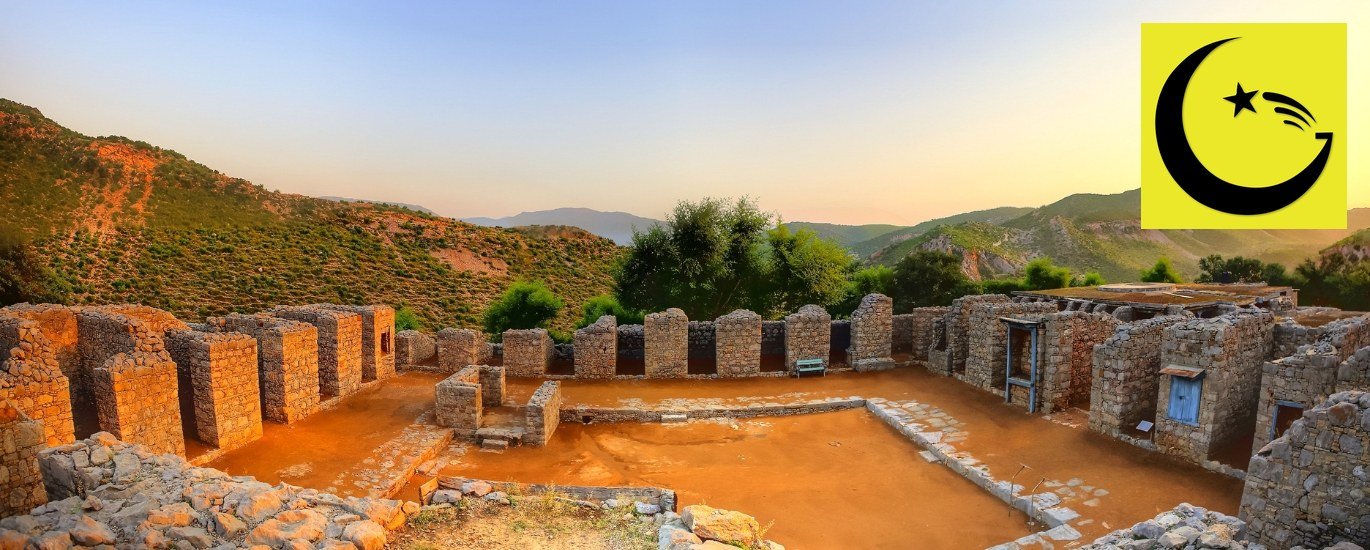
On 25 November the group moved to Taxila for a field monitoring exercise. Taxila is a good classroom for this work. Its remains span centuries of Buddhist, Hindu and Jain history across a wide valley, so the problems are varied: weathering stone, visitor pressure, encroachment and the sheer number of separate monuments under one inscription.
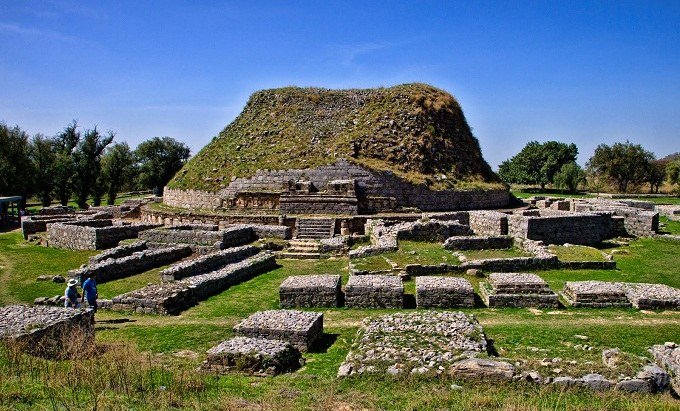
Photo: Islamabad Scene
The six sites this work covers
- Mohenjo-daro, the Bronze Age city in Sindh
- Taxila, the ancient university city in Punjab
- Takht-i-Bahi and Sahr-i-Bahlol, the Buddhist monastic complex in Khyber Pakhtunkhwa
- Lahore Fort and the Shalamar Gardens
- The historical monuments at Makli, Thatta
- Rohtas Fort in Punjab
The six sites face different threats, which is why generic advice does not work. Mohenjo-daro fights groundwater and salt crystallising inside 4,500-year-old brick. Lahore Fort and the Shalamar Gardens sit inside a dense, growing city. Makli’s carved stone necropolis weathers in coastal air, and Rohtas Fort’s massive walls need structural watching. A training programme that teaches threat analysis site by site, rather than one formula for all six, fits that reality.
Why this matters
Inscription on the World Heritage List brings attention and tourists. It does not bring conservators. Pakistan’s six sites are managed by small teams, and the skills this programme teaches, condition monitoring, management planning, threat analysis, are exactly the ones UNESCO asks site managers to demonstrate. Training local staff, rather than flying in a foreign team for one project, is the slower but more durable route.
The cooperation also backs a longer-term institution: Korea is supporting the proposed National Institute of Cultural Heritage in Pakistan, which would give conservation training a permanent home. The World Heritage conservation in Pakistan programme runs to 2028, and the wider partnership to 2030, so this first course is the start of a schedule rather than a one-off event.
Read More: The Six UNESCO World Heritage Sites in Pakistan, From a Bronze Age City to the Mughal Empire
What happens next is written into the framework. The cooperation runs in yearly steps to 2028, with further training and site work to follow this first course, and the wider partnership extends to 2030. The Korea Heritage Agency brings funding and technical assistance; the Department of Archaeology and Museums brings the staff and the sites. If the proposed National Institute of Cultural Heritage is established on schedule, later rounds of training would have a permanent base in Pakistan rather than borrowed classrooms.
Sources
- Press Information Department: Pakistan, Republic of Korea launch capacity building programme for World Heritage conservation
- The Asian Mirror: Pakistan, South Korea launch heritage conservation initiative
- Featured photo: Taxila Museum
- Body photo: Islamabad Scene

Umar Farooq is the founder and editor of Good News Pakistan. An engineer by profession and a writer by passion, he started the site in December 2022 to share good news from Pakistan, and has since written and edited more than 200 articles about its people, sports, science, business and world records. He believes the story of Pakistan is bigger than its headlines, and that good news, told honestly, is worth telling every day.
- Umar Farooq
- Umar Farooq
- Umar Farooq
- Umar Farooq
- Umar Farooq