

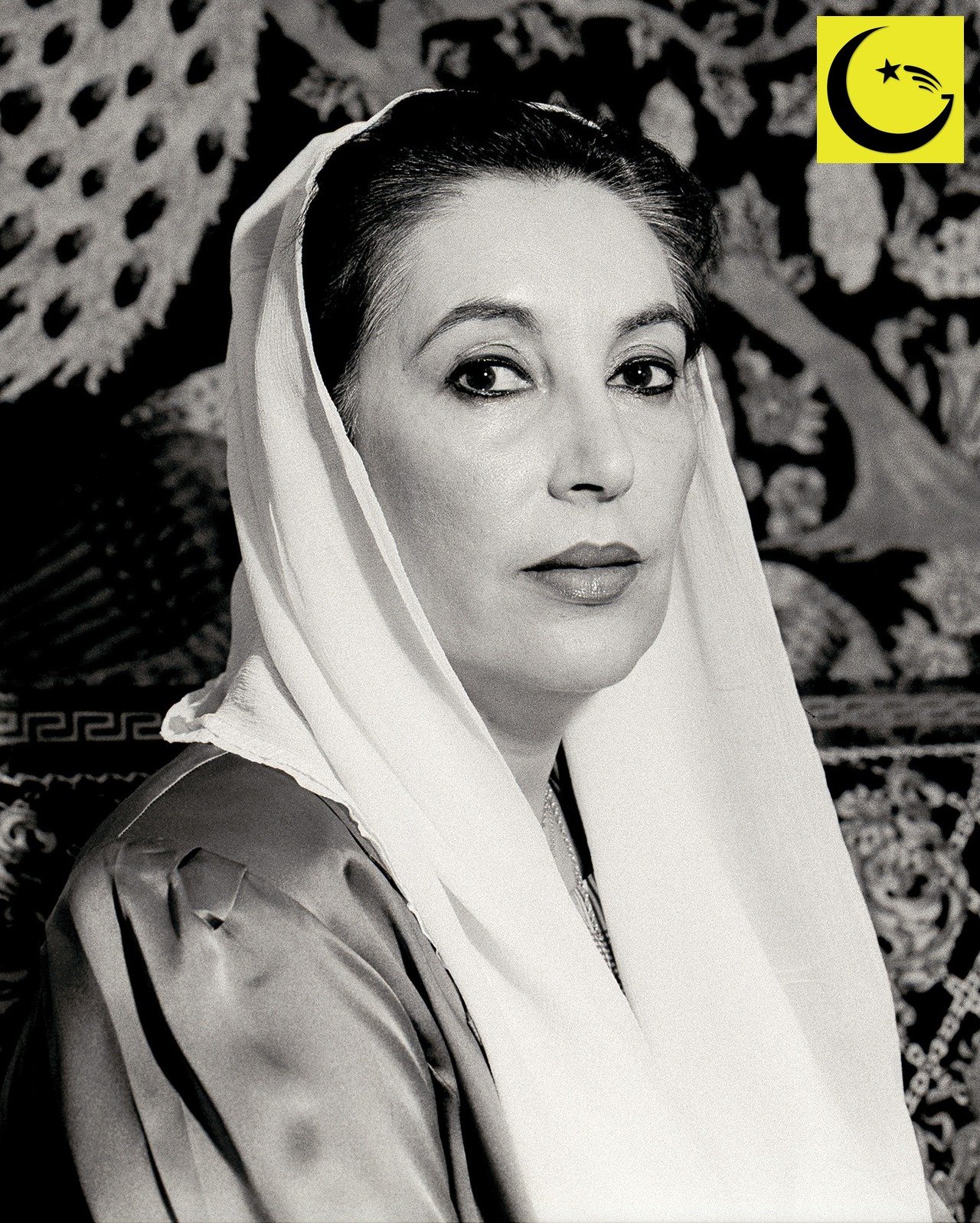
In December 1988, Benazir Bhutto became prime minister of Pakistan, and with that single step a 35 year old from Karachi became the first woman elected to head a democratic government in a Muslim-majority country, and the first woman to lead a Muslim nation in modern history. Nearly four decades later the fact still stands untouched: no woman had done it before her, and in Pakistan no woman has done it since.
In this article: A Karachi childhood and two famous universities; A first at Oxford; December 1988; Two terms as prime minister; Why this is good news for Pakistan
A Karachi Childhood and Two Famous Universities
Benazir Bhutto was born in Karachi on 21 June 1953, the eldest child of Zulfikar Ali Bhutto, who himself later served as prime minister and founded the Pakistan Peoples Party. Politics was the family trade, but her own preparation for it was built in classrooms abroad. At sixteen she went to the United States to study at Radcliffe College, part of Harvard University, where she took her degree in comparative government in 1973.
From Harvard she crossed to the University of Oxford in England, studying philosophy, politics and economics at Lady Margaret Hall, and then international law and diplomacy. It was an education few Pakistani politicians of any generation could match, and she made it count before she ever held office at home.
A First of Her Own at Oxford
Oxford gave Benazir Bhutto a first that belonged to her alone. In 1977 she was elected president of the Oxford Union, the famous debating society that has trained generations of British prime ministers. She was the first Asian woman ever chosen to lead it. The young student from Karachi had won, on votes, one of the most contested student posts in the world, a full decade before she won the bigger one.
December 1988: The Election That Made History
She chaired the Pakistan Peoples Party from 1982, led it through the long years of military rule, and returned to Pakistan in 1986 to huge public welcomes. When elections came in November 1988, the first open national elections in more than a decade, her party won the largest bloc of seats in the National Assembly. In December 1988 she took office as prime minister, aged 35, heading Pakistan’s first civilian government in more than a decade.
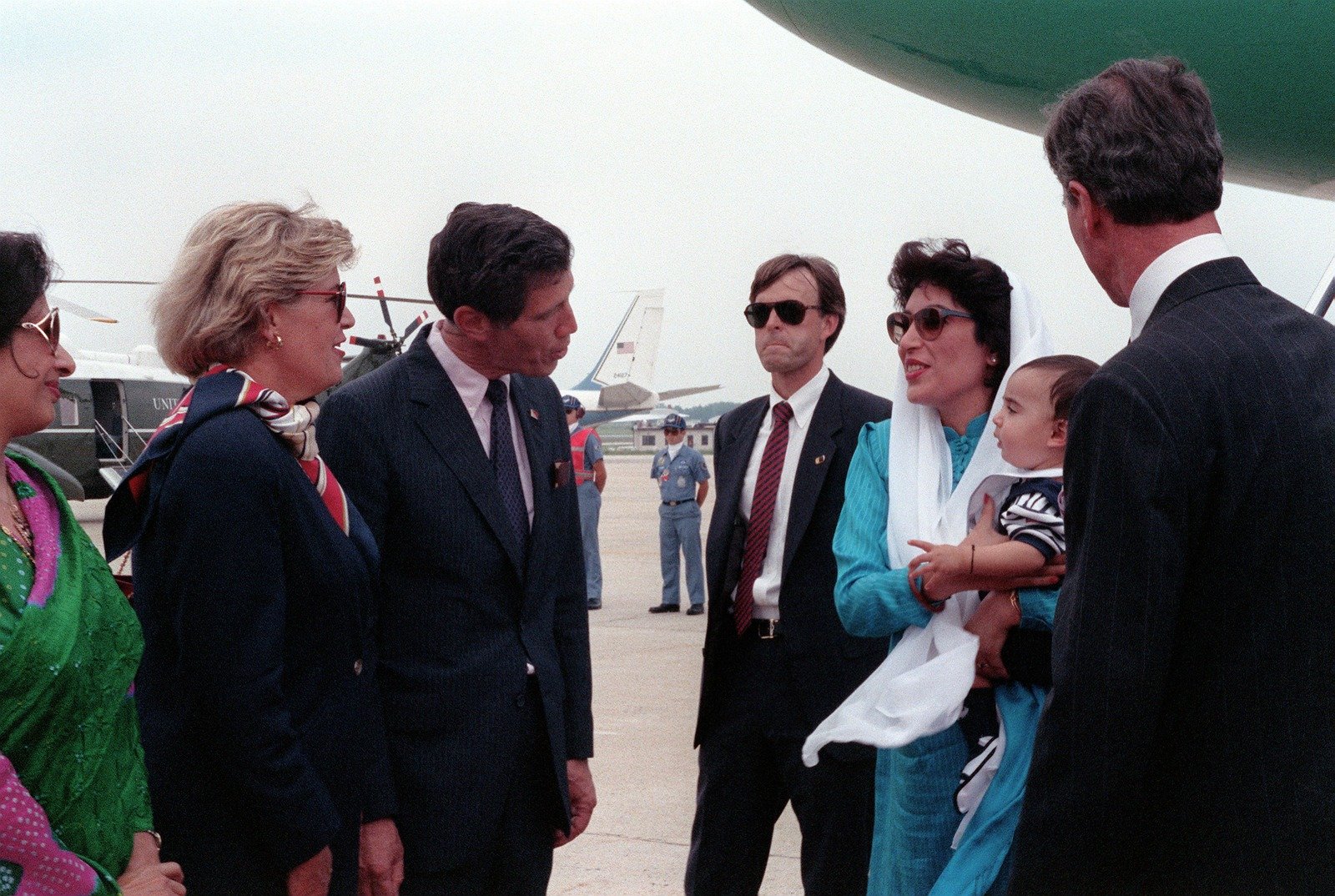
Prime Minister Benazir Bhutto speaks to the press on arriving for a state visit to the United States in June 1989, during her first year in office. Photo: SRA Gerald B. Johnson, US Department of Defense, via Wikimedia Commons
The world noticed. Newsrooms that rarely led on Pakistan led on this: a woman, elected by millions of voters, leading a Muslim-majority nation of more than a hundred million people. The careful wording of the record books is that she was the first woman elected to head a democratic government in a Muslim-majority country. The simpler wording is the one Pakistanis remember: the first woman to lead a Muslim nation in modern history.
Benazir Bhutto’s Two Terms as Prime Minister
Her first government ran from 1988 to 1990. She returned to office after the 1993 elections and served a second term, from 1993 to 1996, representing Pakistan on the world stage, from Washington to Madrid, as one of the most recognisable leaders her country has produced. Two terms, eight years apart in span, made her the defining Pakistani politician of her generation.
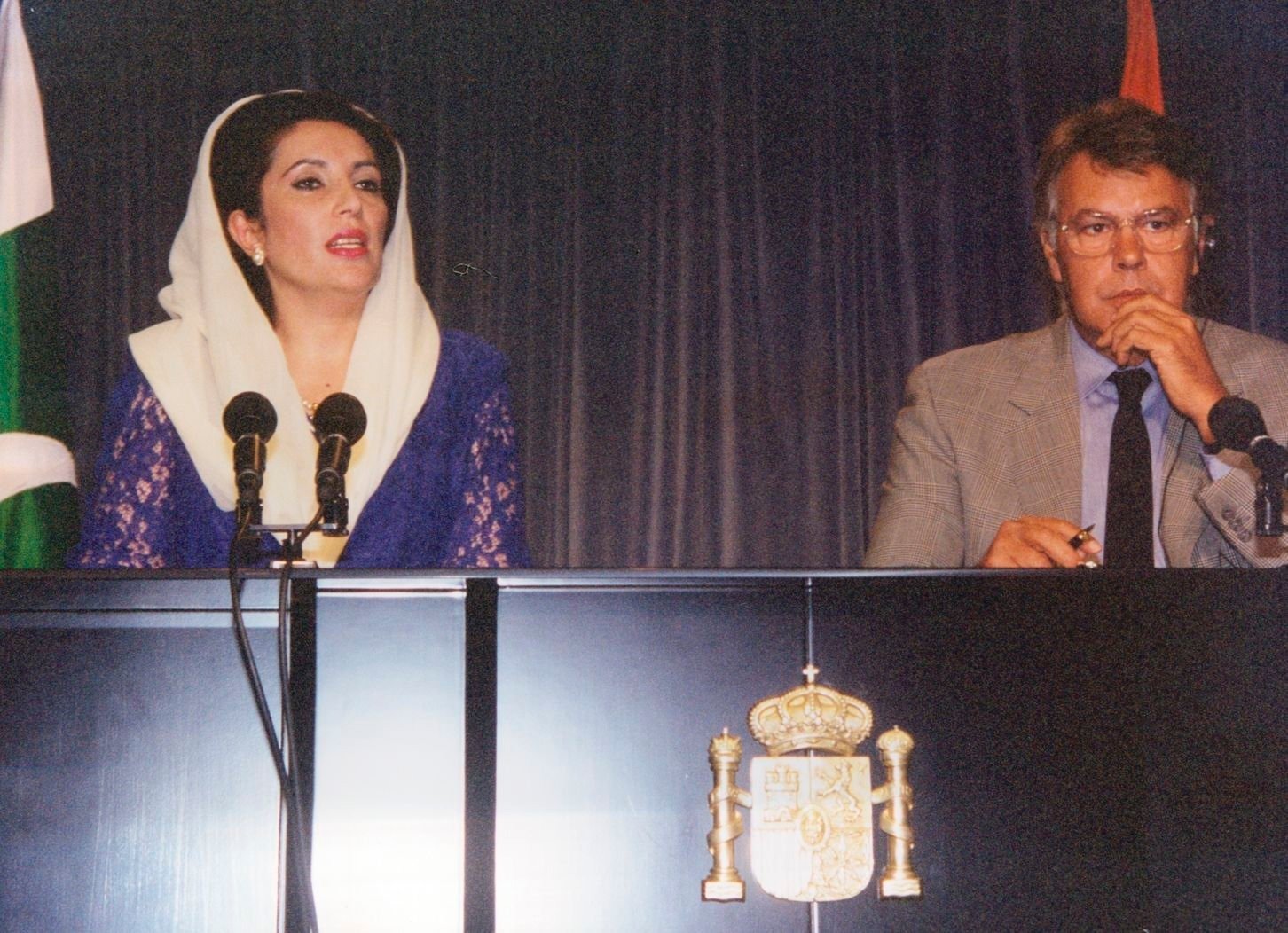
Benazir Bhutto at a joint press conference with Spanish Prime Minister Felipe González in Madrid in September 1994, during her second term in office. Photo: Pool Moncloa, Ministry of the Presidency, Government of Spain, via Wikimedia Commons
To this day she remains Pakistan’s first and only female prime minister. Benazir Bhutto died in Rawalpindi on 27 December 2007, and in the years since she has come to be regarded, well beyond her own party, as an icon for women’s rights in Pakistan and across the Muslim world.
Why This Is Good News for Pakistan
This fact carries a weight that bigger countries cannot claim. In 1988, when much of the world still assumed a woman could not lead a Muslim nation, Pakistani voters elected one, freely and in the open, and then elected her again five years later. Whatever a reader’s politics, the first itself belongs to the whole country: it is proof, written into world history, that Pakistan’s democracy produced a global milestone nearly forty years ago. For every Pakistani girl who is told that high office is not for her, December 1988 stands as the permanent answer. The door was opened once, by election, and a door opened by millions of votes can never be called closed again.
Sources
- Encyclopaedia Britannica, Benazir Bhutto
- Wikipedia, Benazir Bhutto
- Featured photo: Oliver Mark via Wikimedia Commons (CC BY-SA 4.0)
- In-body photos: SRA Gerald B. Johnson, US Department of Defense, via Wikimedia Commons (public domain); Pool Moncloa, Ministry of the Presidency, Government of Spain, via Wikimedia Commons

Umar Farooq is the founder and editor of Good News Pakistan. An engineer by profession and a writer by passion, he started the site in December 2022 to share good news from Pakistan, and has since written and edited more than 200 articles about its people, sports, science, business and world records. He believes the story of Pakistan is bigger than its headlines, and that good news, told honestly, is worth telling every day.
- Umar Farooq
- Umar Farooq
- Umar Farooq
- Umar Farooq
- Umar Farooq